Physics Staff/Student Shop
Located in Room 1249 Chamberlin Hall
Hours:
Monday-Friday 7 am – 3 pm Provided there’s staff available.
- Safety glasses must be worn at all times while in the shop. Please return glasses upon leaving
- Proper footwear must be worn; a complete shoe that covers the toes, tennis shoes are allowed. (NO SANDALS)
- No loose hanging jewelry, rings, watches, or ties while operating equipment.
- Long hair must be tied back, or under a cap or hat.
- No cell phone use while running machines. (as a calculator is permissible)
- You are not to use any piece of equipment that you have not been trained on or not cleared to run by the supervisor in charge.
- All machines and tools are to be used in a safe and appropriate manner.
- Machine guards/stops must be in place and in use while equipment is in operation.
- All equipment and tools must be cleaned after you are done using them.
- All tools are to be used in the manner for which they were designed.
- While you are encouraged to use the shop during supervised hours, if however you have been authorized to use the shop after hours another person must be in the shop with you in case of accident.
- ALL accidents, including minor cuts or burns must be reported to the supervisor in charge within 24 hours.
Only Authorized Shop Users may utilize the equipment after hours.
Authorized Shop Users are those persons who have either taken and passed the Department’s Machine Shop Class or proven their competency in the use of Machine Tools to the Supervisor in charge.
After Hours
Monday – Friday after 3:00 pm
We currently have 2 part time student staff techs working in the student shop. We will try and set up times during their schedule to accommodate students that want to use the student shop. If that doesn’t work, follow the rules below.
After hours users must adhere to the following rules and regulations:
- Main Door to the shop must be left open at all times.
- Buddy System is to be used.
- Must log into the Student shop app and reserve a machine.
The Buddy System is as follows:
- You must sign your name, date, time you arrived, and your shop I.D. # and the name of your “Buddy”.
- Your “Buddy” is someone in the shop with you at all times.
Remember:
- All Safety Rules must be adhered to ESPECIALLY AFTER HOURS. If you see safety
rules being ignored, please report it to Supervisor A.S.A.P. - Notify the Supervisor in charge A.S.A.P. if equipment is in need of repair.
- Always sign out the stock you have used.
Project PDF Files
https://making.engr.wisc.edu/wp-content/uploads/sites/412/2017/12/AlphaPart.pdf
https://making.engr.wisc.edu/wp-content/uploads/sites/412/2017/12/BetaPart.pdf
Training videos
Alpha
Beta
Undimensioned – Try it yourself! – (Solution)
Cutting Speed and Feeds
Some considerations to your choices:
- rigid set up
- is your part secure? no-take lighter cuts
- is your tool as short as possible to do the job? no-use a lower speed
- is the machine rigid? no-use a lower speed and feed
- is your tool sharp? no-reduce your speed and feed or get a new cutter
- does your material work harden? start in the middle of the range
- chip formation & chip evacuation
- inner voice-self preservation-if you are not comfortable with the caculated speed and feed, start off on the lower end of the range
Simplified Speeds and Feeds
S= (CS x 4) ÷ D
S= Speed (revolutions per minute) – how fast you spin the part or tool
CS = Cutting Speed of the material (surface feet per minute)
D = Diameter of the rotating tool or part (inches)
CS for typical materials using high speed cutting tools, for carbide tools increase the CS by 1½ -3 times
Aluminum 200-300
Brass 100-200
Copper 60-80
Plastic 200 varies greatly, depending on the type of plastic
Steel 80-100
Stainless Steel 40-50
FR=Feed Rate (inches per minute) – how fast you cut across the part
FR=CS x # of teeth in tool x chip load
Rule of Thumb
Increase the Feed Rate or Decrease the Speed to remove chatter
For example:
Cutting Aluminum block with a ½” ø high speed end mill with 2 flutes
S = (300 x 4 ) ÷ .5 = 2400 RPM
FR = 2400 x 2 x .001 = 4.8 ipm
this is a good place to start

Jay Bowe
Shop Manager
jsbowe@wisc.edu
608-262-7380
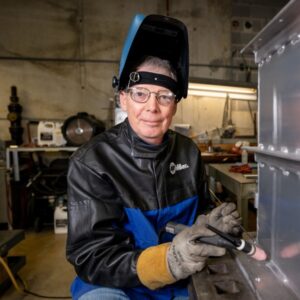
Bill Foster
Instrument Maker/Welder
wbfoster@wisc.edu
608-262-7380

Craig Stiemke
Instrument Maker
castiemke@wisc.edu
608-262-7380
Dan Pape
Instrument Maker
dpape2@wisc.edu
608-262-7380
Terminology
Hand Tools
This is an accordion element with a series of buttons that open and close related content panels.
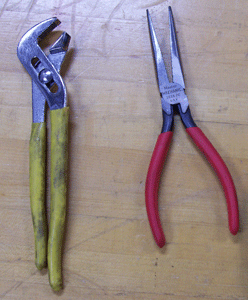
Pliers
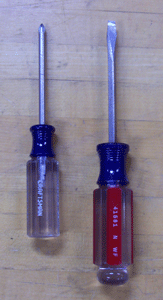
Screwdriver
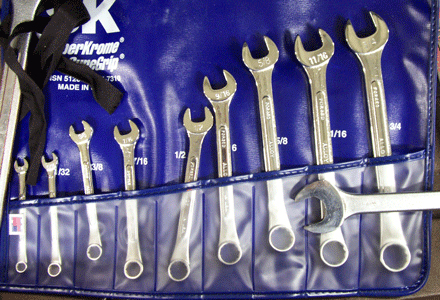
Wrench
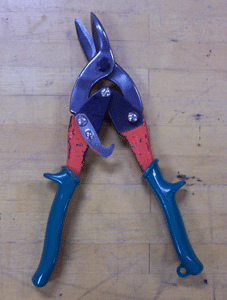
Snips
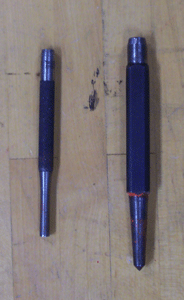
Punch and Hammer
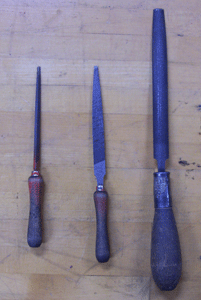
File
Hole Making
This is an accordion element with a series of buttons that open and close related content panels.
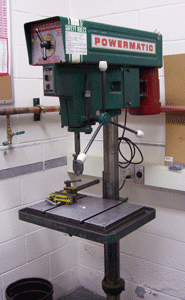
Drill press
Drill Chuck
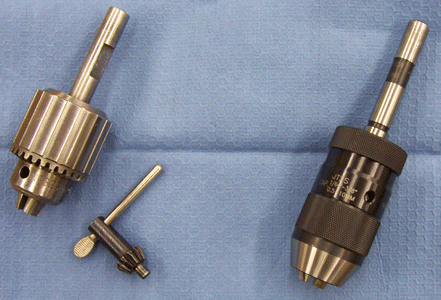
used to hold drill tools NOT end mills
Center Drill
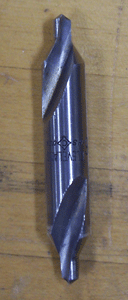
used to start a hole when drilling
Drill Bit Types
This is an accordion element with a series of buttons that open and close related content panels.
Sheet Metal Bit
Sheet Metal cutting Drill Bit
Notice the tip of the drill
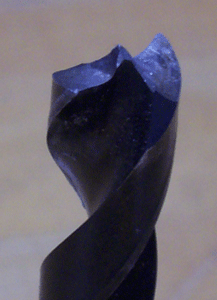
Notice the tip of the drill
Brass/Copper Drill Bit
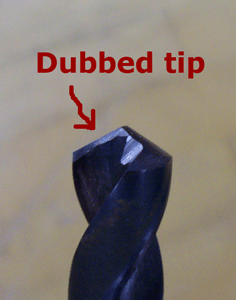
Used for drilling Brass and Copper
Metal Drill Bit
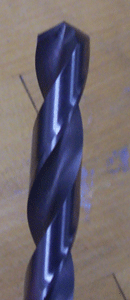
Flat Bottom Drill Bit
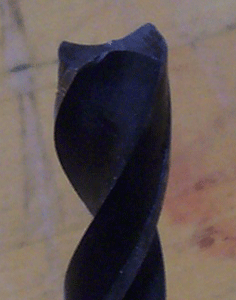
used to make a flat bottom in a pre-drilled hole
Finishing the Hole
This is an accordion element with a series of buttons that open and close related content panels.
Deburring Tool
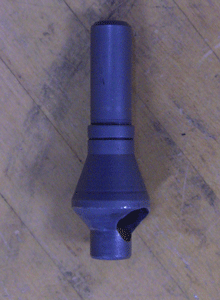
used for deburring the edge of a pre-drilled hole
Counter-sink vs Counter-bore
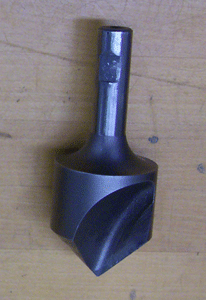
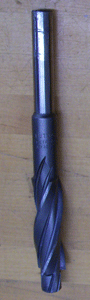

Counter-bore is used to recess a pre-drilled hole for socket-head cap screw
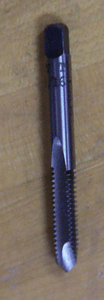
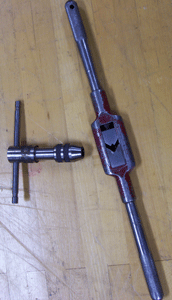
Tap
Lathe
This is an accordion element with a series of buttons that open and close related content panels.
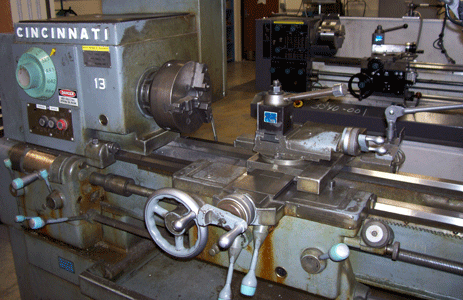
Lathe
Measuring Devices
This is an accordion element with a series of buttons that open and close related content panels.
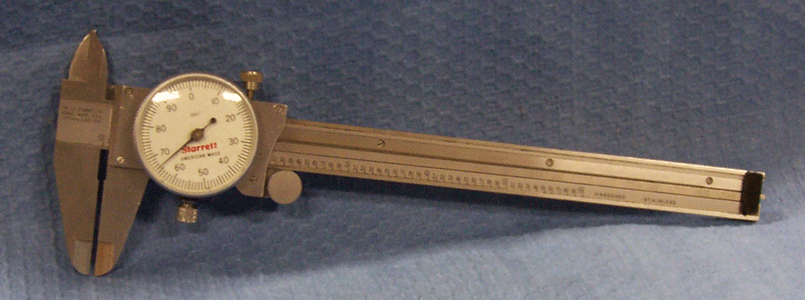
Caliper
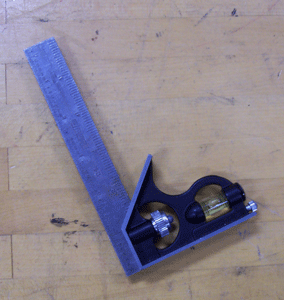
Combination Square
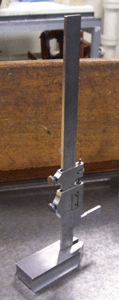
Height Gage
Micrometer
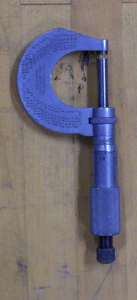
how to read a metric micrometer
Protractor
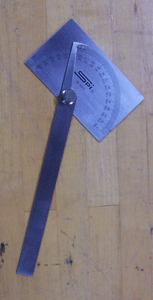
used for measuring angles
Screw Pitch Gage
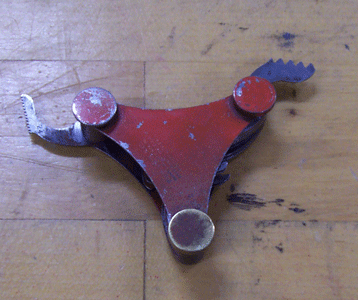
Used to determine the pitch of a thread
Telescoping Hole Gage
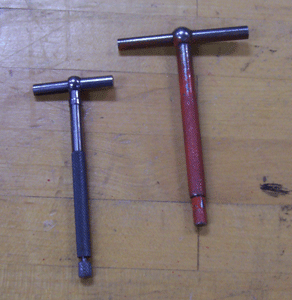
used for measuring the diameter of a hole
Mill
This is an accordion element with a series of buttons that open and close related content panels.
Vertical Mill
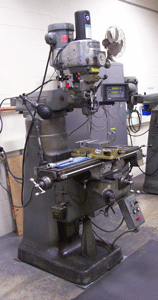
Horizontal Mill
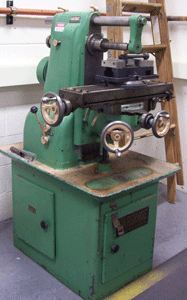
Mill Accessories
This is an accordion element with a series of buttons that open and close related content panels.
R-8 collet
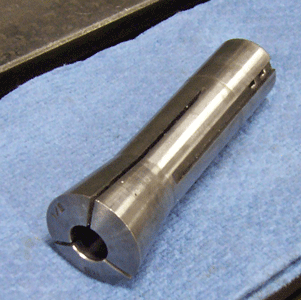
used for holding tools in the Vertical Mill
Edge Finder
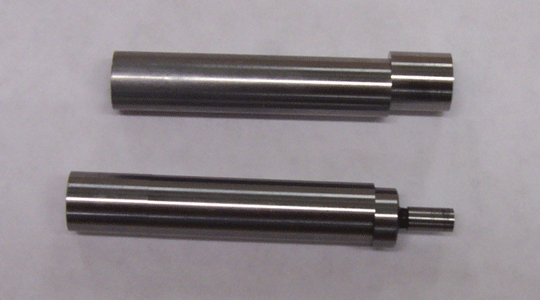
bottom- .2″ diameter edge finder
End Mill
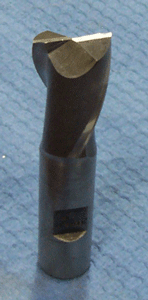
Fly Cutter
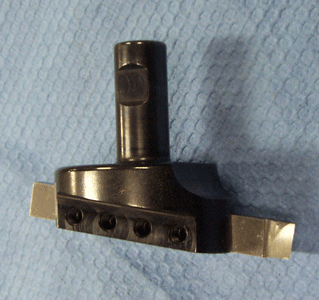
used for milling a flat surface
Boring Head
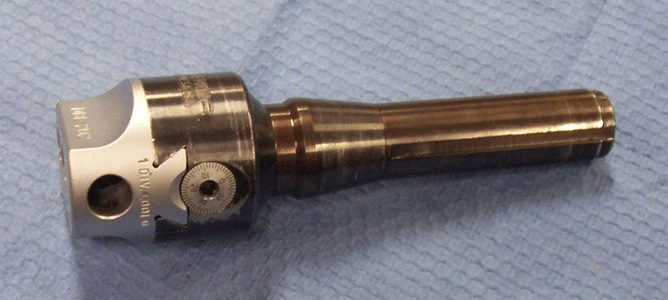
Used for enlarging a hole
Dividing Head
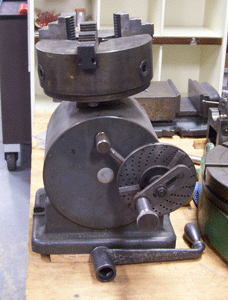
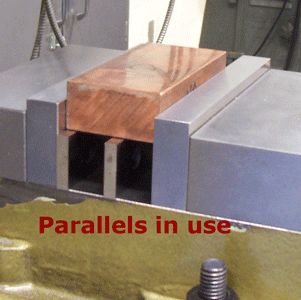
Parallels
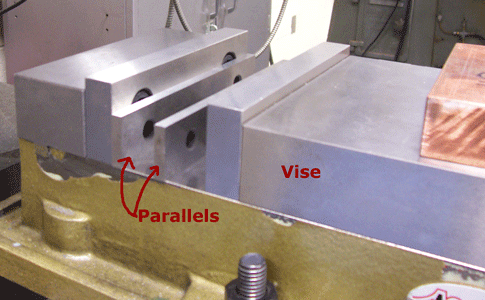
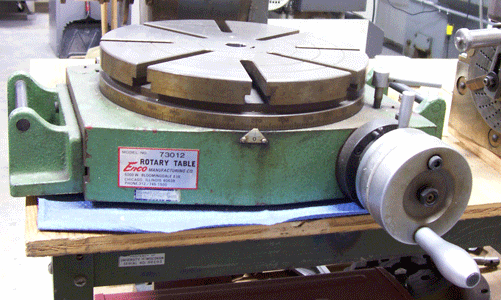
Rotary Table
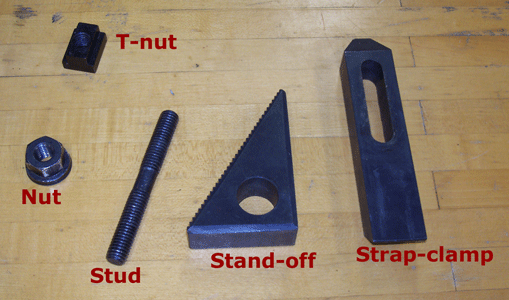
Clamping to table using strap-clamp assembly
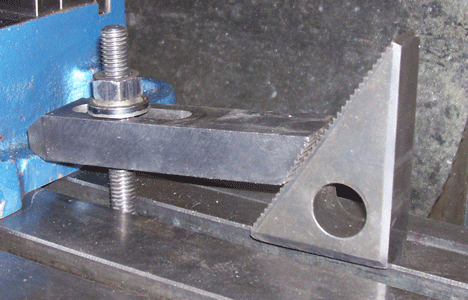
the strap clamp is higher on the stand-off end