University of Wisconsin-Madison Skip navigationDepartment of PhysicsSearchSite MapUW Home


UW Home Page


News & Events

Colloquia & Seminars

Research Groups

People

Prospective Students

Graduate Students

Undergraduate Students


Announcements

Physics Library

For the Public

Alumni

Departmental

Computing

Employment

Find Us

Contact Us

Home

Department of Physics
News & Events

News about the Physics Department, its faculty and student work, current events for this academic calendar year, announcements and recent passings.


News

UW-Madison ‘originators’ honored with Distinguished Alumni Awards
April 21, 2008
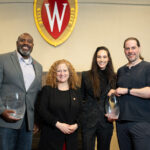
Seven UW-Madison alumni whose original contributions have earned them global recognition will be honored next month with the 2008 Distinguished Alumni Awards, presented by the Wisconsin Alumni Association (WAA).One of the 2008 Distinguished Young Alumni Award honorees is Stephen Turner '91, who earned his UW-Madison bachelor's degree in applied math, engineering and physics.

Read more:http://www.news.wisc.edu/15089

FOUR FACULTY CHOSEN AS GUGGENHEIM FELLOWS
April 9, 2008
Four UW-Madison professors have received 2008 Guggenheim Fellowship Awards, which recognize artists, scholars and scientists based on distinguished past achievement and exceptional future promise. One of them was in Physics. Congratulations to Gary Shiu!

Read more:http://www.news.wisc.edu/15053

Particle Accelerator may Reveal Shape of Alternate Dimensions
January 30, 2008
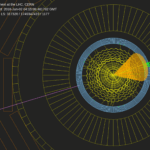
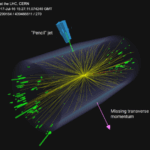
When the world's most powerful particle accelerator starts up later this year, exotic new particles may offer a glimpse of the existence and shapes of extra dimensions. Researchers from the University of Wisconsin-Madison and the University of California-Berkeley say that the telltale signatures left by a new class of particles could distinguish between possible shapes of the extra spatial dimensions predicted by string theory.

Read more:http://www.news.wisc.edu/14678

Physicist Seeks Universe's Dimension
December 22, 2007
Wisconsin State Journal. The white walls of Gary Shiu 's office are broken up by little but a blackboard and a calendar. But inside the plain space, the soft-spoken UW-Madison physicist is creating dramatic images of phenomena people can 't see.
He 's trying to figure out the shape of the universe 's alternate dimensions.
Shiu specializes in string theory, a yet to be proven concept that scientists hope will reconcile Einstein 's theory of relativity with the incompatible law of quantum mechanics.

Read more:http://www.madison.com/wsj/mad/top/index.php?ntid=263655

BREAKING NEWS: Chancellor John Wiley will step down in September
December 7, 2007
The Wisconsin Week Wire: Chancellor John D. Wiley, who has earned a reputation as a campus builder and a farsighted leader since becoming UW-Madison's chief executive in 2001, announced to friends, colleagues and the media today that he will step down in September 2008.
Wiley's leadership legacy is explored in a new Web site that features a list of major accomplishments, interactive timeline, biography and slide show.

Read more:http://www.news.wisc.edu/wiley/

Living with Doubt
September 13, 2007
The Badger Herald: Once she’s done with her Physics 206 textbook this semester, University of Wisconsin freshman Tiffani Puccio plans to give the book to her mother. “She can kind of relate and get a different perspective, more along the lines of what I babble about,” Puccio said. It’s not thermodynamics or quantum theory that she’s been telling her mother about, but religion. And the book isn’t a hefty textbook of definitions and formulas, but rather a paperback titled “Seeking Truth: Living with Doubt,” which the preface describes as a “polemic against all ideologies,” including many religious doctrines. Puccio is a student in the eponymous course taught by the book’s co-author, UW physics professor Marshall Onellion.
Read more:http://badgerherald.com/news/2007/09/13/living_with_doubt.php
University Communications News releases: http://www.news.wisc.edu/releases/13965

Mother-of-pearl: Classic beauty and remarkable strength
July 2, 2007
Professor Pupa Gilbert and her colleagues are studying how the microscale architecture of mother-of-pearl, the iridescent material that lines abalone shells, makes it 3,000 times more fracture-resistant than its mineral building blocks.
Read more:http://www.news.wisc.edu/13904

Dedication of Memorial Plaque
May 18, 2007
The UW-Madison physics department dedicated a plaque in memory of Dr. Robert Fassnacht, who was killed on Aug. 24, 1970 in the Sterling Hall bombing.
Read more:http://www.madison.com/archives/read.php?ref=/wsj/2007/05/18/0705170421.php
http://www.wrn.com/gestalt/go.cfm?objectid=A1305297-B000-06F6-B385379D8DE3CF5B
Click here for the madison.com article

Nanotubes see the light (Nature News and Views)
May 3, 2007
When it comes to having their conduction properties tweaked, carbon nanotubes are bothersome customers. One way to do it is to incorporate a photosensitive dye into the nanotubes' walls.
Read more: http://www.nature.com/nature/journal/v447/n7140/pdf/447050a.pdf

The World's Largest Particle Accelerator
April 09 2007
The cows grazing by the roads outside Geneva, Switzerland, have witnessed some pretty strange things these past few years: Trucks roll by carrying big, superconducting magnets that look like missiles, and other brightly colored pieces of scientific equipment
Read more: http://www.npr.org/templates/story/story.php?storyId=9473392

LARGE HADRON COLLIDER: Having a Blast, Wish You Were Here
March 23, 2007
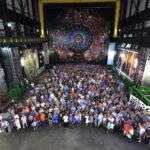
The Large Hadron Collider at CERN will smash protons at unprecedented energies and may open new realms of discovery. In a few months, CERN researchers will have completed the 27-kilometer-long LHC, and in November, they hope to put the largest and most complex experimental device ever built through its warm-up laps. Smashing particles at energies seven times higher than the previous record, the LHC should blast out the one bit of matter missing from physicists' theory of the known particles. It could also spit out a slew of other particles and open a new era of discovery. The LHC will make CERN the world's center for particle physics.
Read more: http://www.sciencemag.org/cgi/content/full/315/5819/1652

IceCube Telescope Construction Exceeds Season's Goals
February 12 2007
As the Austral summer wanes, so does the highly successful 2006-2007 work season at the IceCube Neutrino Observatory in Antarctica.
Read more: http://www.news.wisc.edu/13444.html

Physicists Find Way to 'See' Extra Dimensions
February 2 2007
Peering backward in time to an instant after the big bang, University of Wisconsin-Madison physicists have devised an approach that may help unlock the hidden shapes of alternate dimensions of the universe.
Read more: http://www.news.wisc.edu/13422.html.

Physics Professor Demonstrates Holographic "Codes" at Glenn Stephens Elementary School
January 31 2007
UW-Madison Physics Professor Thad Walker shows about 200 students how to make customized computer generated holograms using a novel low-tech method at the Glenn Stephens Elementary School's Science Night on January 31, 2007.
Read more: http://www.physics.wisc.edu/news/holography-without-photography/

From Deep, Cold Space: South Pole Project Seeks Answers from Depths of the Universe
January 24 2007
Near the South Pole, UW-Madison scientists are helping create one of the world's largest scientific instruments by sinking about 4,200 sensors 1.5 miles deep into the ice. They hope to capture neutrinos, elusive particles that may hold the keys to such mysteries as black holes. For more information, read the article online or view the entire Wisconsin State Journal article in PDF format: page 1 and page 2.

UW Physics Professor Franz Himpsel receives 2007 Davisson-Germer Prize in Atomic or Surface Physics
January 2007
The Davisson-Germer Prize in Athomic or Surface Physics recognizes and encourages outstanding work in atomic physics or surface physics. Franz was awarded for pioneering investigations of the electronic structure of surfaces, interfaces, adsorbates, and nanostructures. For further information, read more about the prize and more about Franz Himpsel.

First Year Interest Group (FIG)
December 20 2006
The Physics Department recently taught a First Year Interest Group (FIG) course for freshmen entitled "Symmetry and Phase Transitions." The students chose their individual phase transitions, taught themselves, and wrote reports as part of the course. For more information, contact Professor Marshall Onellion.

Reactor Experiments Seek Missing Neutrino Mixing Angle
November 10 2006
Exposing the details of how electron neutrinos change flavor could be a step toward determining the neutrino mass hierarchy and explaining the imbalance of matter and antimatter in the universe.
Read more: http://dayabay.bnl.gov/ReactorsPT.pdf

Catching Neutrinos in China
November 2006
Buried deep in the mountains of southern China, a new neutrino experiment would rely on a series of Chinese nuclear reactors and the brains of scientists from several countries
Read more: http://www.symmetrymagazine.org/cms/?pid=1000393

Research Dishes Out Flexible Computer Chips
July 18 2006
New thin-film semiconductor techniques invented by University of Wisconsin-Madison engineers promise to add sensing, computing and imaging capability to an amazing array of materials.
Read more: http://www.news.wisc.edu/12718.html

China, U.S. to Launch Joint Neutrino Experiment
June 9 2006
Chinese and U.S. physicists are to jointly conduct the world's largest neutrino experiment at the Daya Bay Nuclear Plant in south China. The experiment, costing roughly 400 million yuan (50 million U.S. dollars), is designed to test the mixing angle of neutrino 13, which is a vital measurement in the most advanced particle physics.
Read more: http://english.people.com.cn/200606/09/eng20060609_272586.html

Physicists Persevere in Quest for Inexhaustible Energy Source
May 30 2006
An international collective of physicists and engineers is working to both complement and lend expertise directly to the International Thermonuclear Experimental Reactor (ITER), and researchers at the University of Wisconsin-Madison are firmly placed among them.
Read more: http://www.news.wisc.edu/12628.html

Five Faculty Elected to Prestigious Academy
April 25 2006
Five faculty members at the University of Wisconsin-Madison have been elected to the American Academy of Arts and Sciences, an independent policy research center that annually honors leading thinkers in the sciences, arts, humanities, public affairs and business.
Read more: http://www.news.wisc.edu/12504.htm

Scientists fashion semiconductors into flexible membranes
April 10 2006
University of Wisconsin-Madison researchers have demonstrated a way to release thin membranes of semiconductors from a substrate and transfer them to new surfaces--an advance that could unite the properties of silicon and many other materials, including diamond, metal and even plastic.
Read more: http://www.news.wisc.edu/12411.html

Elastically Relaxed Free-Standing Strained-Silicon Nanomembranes
April 9 2006
Demonstration of a versatile method for control strain in silicon and silicon-germanium by fabricating membranes in which the final strain state is controlled by elastic strain sharing, that is, without the formation of defects.
Read more: http://www.nature.com/nmat/journal/v5/n5/abs/nmat1606.html

Polar Neutrino Observatory Takes a Big Step Forward
March 21 2006
The IceCube array now is composed of nine strings and 16 surface detector stations, in addition to the still operational AMANDA array.
Read more: http://www.news.wisc.edu/12310.html

UW-Madison Tops Nation in Number of 2006 Sloan Research Fellowships
March 20 2006
UW-Madison leads the nation in the number of Sloan Foundation Fellowships in Science and Technology awarded in 2006.
Read more: http://www.news.wisc.edu/12303.html

Turbulent Liquid-Sodium Flow Induces Magnetic Dipole in a Laboratory Analogue of the Geodynamo
February 24 2006
Read more: http://ww.physics.wisc.edu/news/06s-forest/Schwarzschild06.pdf

Semiconductor Physics: Transport News
February 9 2006
Conventionally, conduction in silicon is enhanced by doping--adding impurities that change the material's electronic structure. But exploiting surface effects in thin silicon films may offer yet other opportunities.
Read more: www.nature.com/nature/journal/v439/n7077/full/439671a.html (subscription required)

Physical "Wonders" Revealed in New Book and DVD Set
February 9 2006
"Physics Demonstrations: A Sourcebook for Teachers of Physics" is available now and will be officially released March 1 by the University of Wisconsin Press. The book is a detailed, 300-page, heavily illustrated manual on how to present, with flair, 85 "Wonders of Science" demonstrations.
Read more: http://www.news.wisc.edu/12139.html

Study Explains Unexpected Conductivity of Nanoscale Silicon
February 8 2006
When the surface of nanoscale silicon is specially cleaned, the surface itself facilitates current flow in thin layers that ordinarily won't conduct. In fact, conductivity at the nanoscale is completely independent of the added impurities, or dopants, that usually control silicon's electrical properties Read more: http://www.news.wisc.edu/12135.html

World's Fastest Image Processor Aids Search For Elusive Form of Matter
February 6 2006
Now nearing completion in the physics department is a device known to scientists by the off-putting moniker "Regional Calorimeter Trigger".â The device really is, however, is the world' fastest image processor, a camera of sorts that can analyze a billion proton collisions per second and, of those, gather digitized data sets for 50,000 events that have someâ"interesting physics."
Read more: http://www.news.wisc.edu/12105.html

The Cover of Physics Today Shows the Liquid-sodium Experiment at UW-Madison
February 1 2006
View it here: http://www.physics.wisc.edu/news/06s-forest/pt-cover02_2006.pdf

Radiotherapy Advance Points Way to Noninvasive Brain Cancer Treatment
January 1 2006
In the Jan. 1, 2006 issue of the journal Clinical Cancer Research, Gelsomina "Pupa" De Stasio, professor of physics at the University of Wisconsin-Madison, and colleagues report on research into using a new radiotherapy technique for fighting GBM with the element gadolinium. The approach might lead to less invasive treatments that offer greater promise of alleviating the disease.
Read more: http://www.news.wisc.edu/release/11986.html


Current Events

1st Annual Physics Fair
February 16, 2008
You are invited to attend the 1st Annual Physics Fair on February 16, 2008. This will be an open house in which members of the public can come to learn about the research and teaching that are a part of our department. The Physics Fair will include laboratory tours, hands-on demonstrations, activities for kids and families, and informal conversations with scientists. We hope to have exhibits representing research groups in the department as well as displays on more general physics topics. Additionally, the Ingersoll Physics Museum will be open and the 25th Annual Wonders of Physics public presentations will take place.

Read More: http://uw.physics.wisc.edu/~wonders/PhysicsFair.html

Antarctic science
February 12, 2008
CBS Evening News with Katie Couric will air their piece on Antarctic science on TUESDAY, Feb. 12

Ice Cube Project Show
December 27, 2007
Wisconsin Public Radio will be re-airing the Ice Cube Project show that was produced earlier this year on New Years Eve, Monday 31st, once at 3pm and again at 9pm. It is airing again because it was such a popular show.Happy listening and a warm happy new year!!

http://www.wpr.org/hereonearth/archive_070726k.cfm

Wisconsin Free Electron Laser Symposium
October 11th, 2007
A symposium will be held on October 11th, 2007 on the University of Wisconsin-Madison campus introducing the concept of the Wisconsin Free Electron Laser (WiFEL). The symposium is titled "Plans for the Wisconsin Free Electron Laser Facility: Preliminary Design Performance and Scientific Opportunities."
This proposed new multidisciplinary, international User facility will be a superconducting linac driven Free Electron Laser source capable of producing fully coherent photon beams with short, highly monochromatic, and variable rep rate pulses covering the VUV and soft x-ray range.
After detailing the groundbreaking capabilities that would be offered by this facility, presentations by collaborating researchers will present the transformative scientific reach offered in molecular dynamics, coherent imaging, resonant inelastic scattering, photoemission spectroscopy,atomic/molecular physics, biological sciences, and nanotechnology.

There is no cost to attend the symposium but registration is required. More information and online registration is available on the WiFEL website at http://www.wifel.wisc.edu.
If you have any questions please call the Synchrotron Radiation Center at 1-608-877-2000 or email srcadmin@src.wisc.edu.

Dr. Matthew J. Vanderhill to Visit
October 10-11, 2007
Dr. Matthew J. Vanderhill, a former UW Physics Graduate Student, who is currently a staff scientist at MIT Lincoln Laboratory, will be visiting the campus on October 10/11. He will be giving an informal seminar at Union South at 6:00pm on work at Lincoln, and will be in the Physics Department Office on Thursday afternoon for interviews. Lincoln is a federal research center* that conducts a wide variety of applied and basic research in such areas as advanced electronic and optical materials, communication systems, radar and optical systems technology, air traffic control, and air and missile defense technology. There will also be opportunity to ask questions about working at Lincoln and living in the Boston and New England area. Lincoln has openings for students with PhD, MS, and BS degrees and annually obtains a significant portion of new employees from academia.
For more information please visit:http://www.ll.mit.edu/careers/careers.html
This is a great opportunity that could be of interest to both undergrads and graduate students. Refreshments and pizza will be served.

Shell Exploration and Production Company
October 8-10, 2007
David J Schaper, Petrophysical Engineer with Shell will be here October 8-10. Shell will again be recruiting at the University of Wisconsin this year looking to interview MS and PhD physics candidate students looking for challenging and rewarding jobs and summer internships.

Information Session: Monday, Oct 8 4pm, Rm. 2241
Interview times for interested Physics students: Tuesday October 9th (Signup Sheet in 2320H Chamberlin). Students must fill out an application form at http://www.shell.com/careers.

Graduate School Information Panel for Physics Undergraduates
October 5, 2007
3:30 PM, room 2241 Chamberlin Hall
Come & hear faculty and graduate student perspectives on applying to Graduate School and how wonderful & rewarding graduate school can be!Refreshments will be served! Physics Faculty Panelists include Prof. Aki Hashimoto, String Theory; Prof. Robert Joynt, Atomic & Condensed Matter Group; Prof. Jim Lawler, Atomic & Condensed Matter Group; Prof. Dan McCammon, Space Physics Group; Plus a panel of Physics Graduate Students.

Spring Departmental Picnic
Sunday, May 6th at 4pm
Hoyt Park. on Regent St (Large Shelter), park location
We have been busy planning a spring departmental picnic and we want to see everyone there, including students, faculty, staff, and their families. The department is kindly providing grills, meat (burgers, brats, and veggie burgers), buns, condiments, plasticware, and beverages (including some alcohol). We would like to ask you to bring some dishes to pass though, potluck style.
LAST NAME: A-O:
   Please bring a side dish to pass (i.e. potato salad,lettuce salad, etc.)
LAST NAME: P-Z:
    please bring a dessert to pass
The large shelter is by some grass fields, a basketball court, and playground, so bring your sport of choice. We are also planning on bringing some firewood and smores supplies for anyone sticking around. We hope to see you there!
If you have questions, please email rgavin@wisc.edu

Wednesday Nite @ the Lab
February 7th 2007, 7:00PM to 8:15PM
Professor Francis Halzen
Room 1360 Biotechnology Center, 425 Henry Mall
Eighty holes over two kilometers deep will be melted in the Antarctic icecap over the next five years to be used as astronomical observatories. Into each hole is lowered a string knotted with football-sized light detectors which are sensitive to the shimmering blue light emitted in the surrounding clear ice when ghostly particles called neutrinos pass through the Earth.

The 2007 Wonders of Physics
The Wonders of Physics is a fast-paced presentation of entertaining and educational physics demonstrations. The aim of the program, which was started in 1984, is to generate interest in physics among people of all ages and backgrounds.
Show Dates and Times:
    1 and 4 PM, Sunday, February 11th
    1 and 4 PM, Saturday, February 17th
    1 and 4 PM, Sunday, February 18th


Announcements


Passings


News & Events Archive

For current and upcoming Physics Department colloquia and seminars, visit Colloquia & Seminars.

For general campus events, visit Today@UW-Madison.


Questions? Contact the Department of Physics

Last updated: 2/17/2007
 
  © 2007 The Board of Regents of the University of Wisconsin System Top of Page