Francis Halzen
Position title: Gregory Breit Professor and Vilas Research Professor
Email: halzen@icecube.wisc.edu
Phone: (608) 262-2667
Websites: Home Page, IceCube, Phenomenology
Research Interests: Particle Physics, Astrophysics, and Cosmology
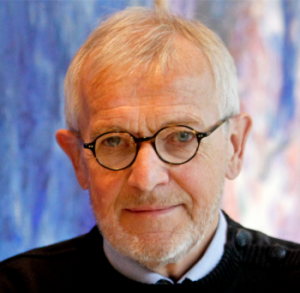
Born in Belgium, Halzen received his Master’s and PhD degrees from what is now KU Leuven, Belgium, and has been on the physics faculty at UW–Madison since 1972; in 2021, Halzen was named a Vilas Research Professor. He has been a fellow of the American Physical Society since 1994 and was awarded their APS Medal for Exceptional Achievement in Research in 2026, is a member of the National Academy, and is the recipient of numerous awards, including the 2014 Smithsonian American Ingenuity Award, the 2015 Balzan Prize, a 2018 Bruno Pontecorvo Prize, the 2019 IUPAP Yodh Prize, the 2021 Bruno Rossi Prize, the 2021 Homi Bhabha Award, and honorary doctorates at several universities.
He is perhaps foremost the principal investigator of the IceCube Neutrino Observatory, a project he initiated in the late 1980s that eventually transformed a cubic-kilometer of natural Antarctic ice below the National Science Foundation’s South Pole station in a particle detector. IceCube’s first observations of high-energy cosmic neutrinos garnered the 2013 Physics World Breakthrough of the Year Award. IceCube provided evidence of high-energy neutrino emission from the vicinity of supermassive black holes hiding in the dense cores of active galaxies, which turns out to be a first clue in figuring out where cosmic rays originate, a longstanding puzzle in astronomy stemming from the discovery of cosmic rays more than a century ago. Recently, IceCube finally discovered neutrinos originating in our own Milky Way.
Halzen is the co-author of Quarks and Leptons, a textbook on modern particle physics that continues to be used extensively throughout college campuses today. He has more than one thousand publications to his credit and his essay “Antarctic Dreams,” about the early days of AMANDA, IceCube’s precursor, was featured in The Best American Science Writing 2000.