By Kayla Leonard, PGSC President 2020-2021
From adjusting to life in grad school and finding the right research group, to job searching after graduation and everything in between, earning a PhD can present many new challenges, both academically and personally. In an effort to provide peer support and liaise with department faculty, the Physics Graduate Student Council was formed.
Now entering its third year of existence, the Physics Graduate Student Council (PGSC) is reaching its stride in finding ways to support the graduate students in our department. With a focus on supporting graduate students both personally and professionally, as well as serving as an extra communication channel between students and the department, our group of about 10 graduate students is passionate about the well-being and success of graduate students in our department.
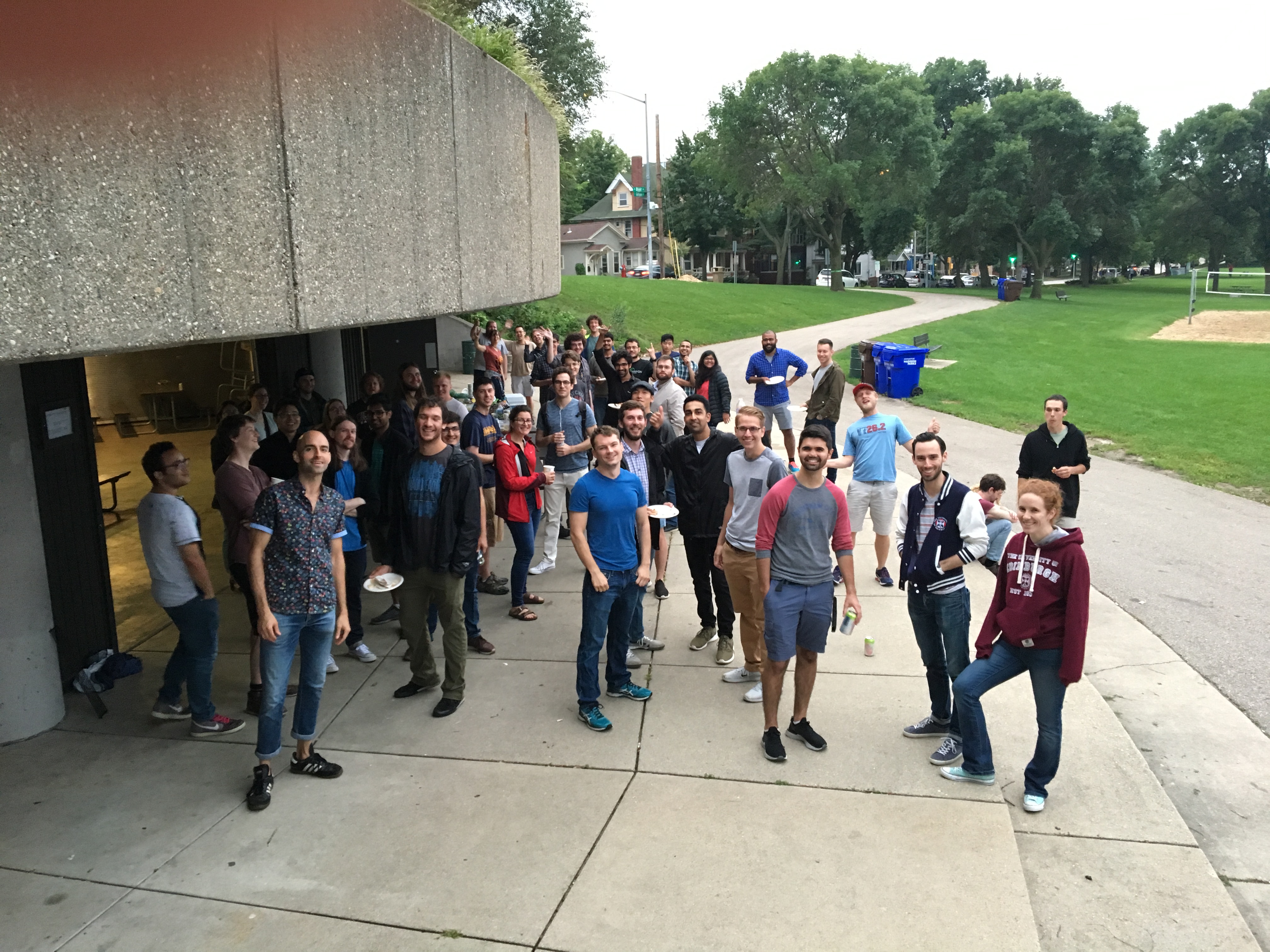
We formed in 2018 after a series of town halls hosted by the Department Chair led to some great dialogue about issues that had been weighing on the graduate students. It became clear that a similar organization, the Gender Minorities and Women in Physics (GMaWiP), had been doing a lot of advocacy on behalf of all students and so it seemed natural to have a similar organization for all graduate students. Additionally, some junior faculty in the department told us at the town halls that when they were in graduate school, their universities also had physics graduate councils and they encouraged us to form.
Over the next summer, a group of about 10-20 grad students met weekly to flesh out the details of what PGSC should look like. We spent hours sifting through websites from physics grad councils at our peer institutions and grad councils at other departments within UW-Madison. Some have one representative per year in school, some have one representative per research area, some were purely topical with a chair for each major activity. We decided to go with a hybrid model. It was important to us to have key people responsible for events like professional development and recruitment weekends, but also to have an advocacy team with ties to everyone in the department. So in addition to chairs of peer mentoring, recruitment, etc. we have “at-large” representatives for first years, second and third years who are “pre-prelim”, fourth and beyond who are “post-prelim”, international students, and GMaWiP, since each group has their own unique set of circumstances to navigate.
Something that was very important to us was having buy-in from the grad students. If we claim to represent all the physics grad students, we want to make sure that’s true. After drafting our constitution and organization chart, we wrote up our proposal and circulated it to all the graduate students in the department. We set ourselves a threshold of requiring the signatures of at least 51% of grad students, which we successfully met, and thus PGSC was born!
We identified five major pillars that we think are the most effective ways to support students while they are here, and help prepare for careers after graduating. Under the leadership of the first two presidents Adrian Fraser (2018-2019) and Susan Sorensen (2019-2020), here are some of the ways that we’ve worked towards each goal over the past few years:
- Communication & Advocacy. This is the original reason that PGSC formed. When entering the program, we are all signing up for several years of rigorous and rewarding physics training, both in the classroom and the research lab. There will always be difficult material to learn, complicated lab dynamics to navigate, etc. but our goal is to help ensure that to the greatest extent possible the focus always remains on learning new physics and skills. We help to bridge the gap between students and the department when obstacles arise that are impeding the learning process, whether that’s advocating for re-evaluation of outdated program policies no longer serving the purpose they were intended to, or serving as the grad student voice when the department is making policy to address nationwide crises. We know the department has rigorous and thorough standards when admitting students, so we want to make sure that upon entering the program everyone knows that they belong here and receives the support they need to ensure nobody falls through the cracks.
- Recruit & Welcome. Another major aspect of PGSC is helping to plan and execute Prospective Student Weekends and Orientation Week for incoming Ph.D. students. At both events, PGSC organizes social activities for new students to meet current students and panels in which prospective/incoming students can ask questions to current students to get a feel for a wide range of topics like life in Madison, coursework, research groups, etc.
-
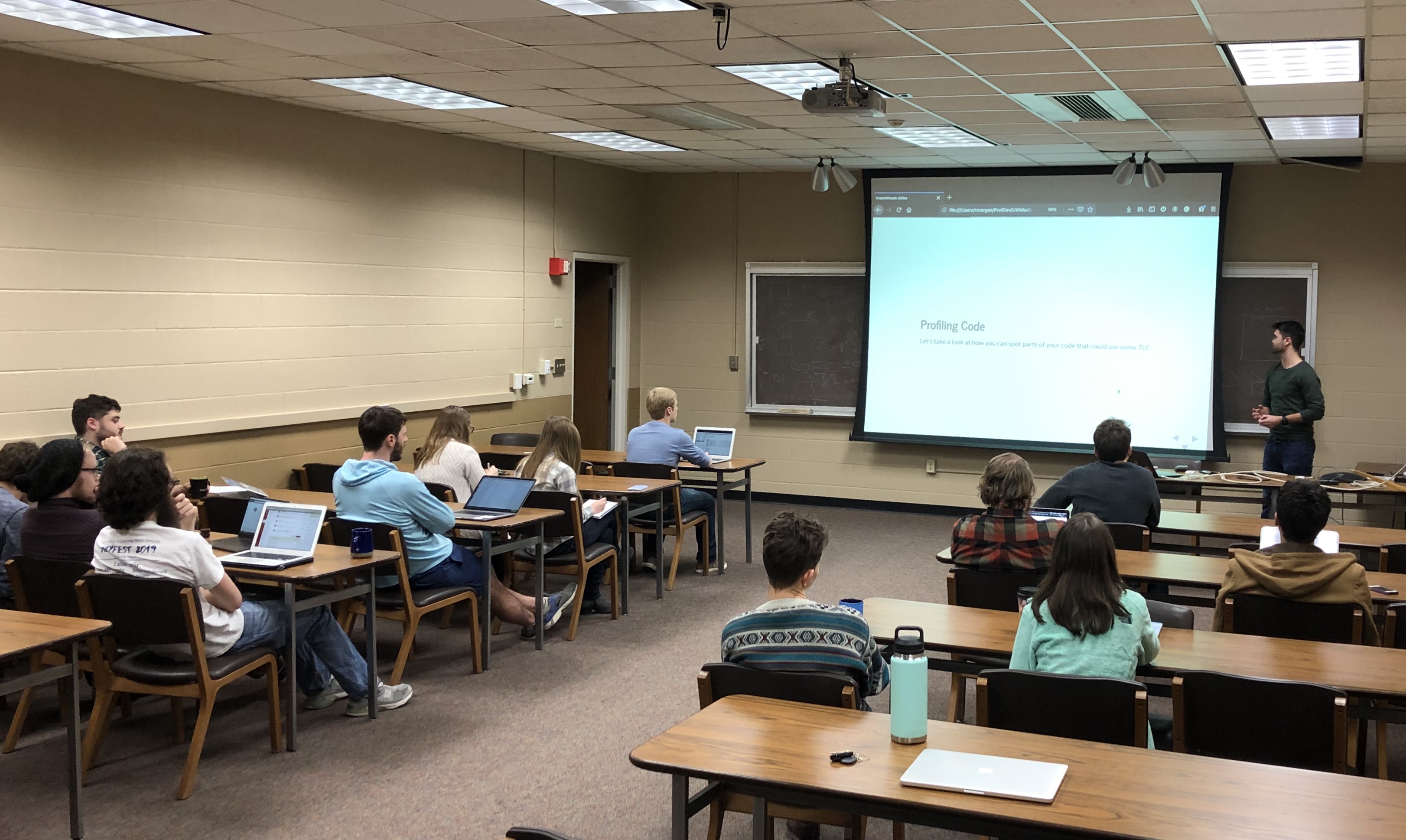
Grad student Rob Morgan, PGSC Chair of Professional Development, presents on how to make code more efficient at a PGSC professional development workshop. Professional Development. In 2019, we received a grant from the university to bring in external speakers to talk about post-graduation career options for Ph.D. physicists, including Crystal Bailey from APS. In the 2019-2020 school year, we hosted bi-weekly seminars covering topics such as improving coding efficiency, creating a professional website, learning GitHub, and more.
- Social Cohesion. Many students form a tight-knit group with others in their cohort through classes and study groups but there are often not strong bonds between different years unless you work in the same research group. PGSC has established many opportunities for casual interactions through a weekly cookie hour on Wednesday afternoons, activities like pizza and board game night, and a ping pong tournament which even got several professors involved!
- Peer Mentoring. The most recent addition to PGSC was the creation of a peer mentoring program. In this program, first year students and anyone else interested can sign up to be a mentee, and older students sign up to be mentors. Pairs are matched by personal preference which can be, for example, another woman in physics, someone in the same research area, another international student, or any other factor the mentee thinks would be a helpful perspective. The program was quite successful in its first year!
It’s our hope that with each new year of students, PGSC becomes a staple part of the grad student experience here at UW. We think there are a lot of benefits of having the support of peers, both personally and professionally, throughout graduate school. If you have any ideas to share, we are always eager to host new seminars and would be excited to learn from our alumni community. We’re excited to see what each new school year holds and continually work towards making our department a great place for all graduate students to live and work.
Physics PhD alumni, we’d like to connect!
We welcome you to join our LinkedIn Group for Current and Alumni Physics Graduate Students. We know our alumni have followed a huge range of careers beyond academia, and we’d love for graduating students to connect with alumni who went down the same path. If you have knowledge to offer, we would love to host you (even virtually right now) for a seminar about your career path, or any other topic. Please also reach out to us if you’d like to discuss other ways we can include you and learn from you.
PGSC Officers
- President — Kayla Leonard
- Vice President — Abigail Bishop
For a full list, please visit the PGSC website