Mark Friesen

Position title: Distinguished Scientist

Email: friesen@physics.wisc.edu

Phone: (608) 265-2496

Chamberlin Hall 5326

CV

Publications

Google Scholar

Websites: Home Page, Biophysics and Condensed Matter Physics, Wisconsin Quantum Institute

Research Interests: Quantum computing, semiconductor physics, device modeling
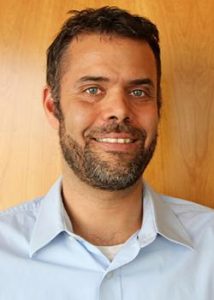
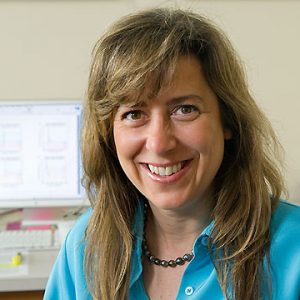
profile photo of Mark Friesen

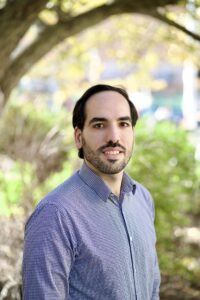
Mark Friesen is a condensed matter theorist, working mainly on problems related to quantum computing. A primary focus of his work involves the physics and operation of spin and charge qubits formed in semiconductor quantum dots. Research topics include the relation between semiconductor band structure and qubit operation, detrimental noise and noise mitigation in quantum devices, and simulations of realistic devices and the many-body qubit wave functions contained in them. All of these projects are closely aligned with ongoing experiments at UW-Madison and across the globe. A recent exciting direction involves transporting (“shuttling”) qubits between distant regions of the quantum processor. Friesen holds 6 patents and has authored or coauthored 145 peer-reviewed publications, with an h-factor of 54.
Francis Halzen

Position title: Gregory Breit Professor and Vilas Research Professor

Email: halzen@icecube.wisc.edu

Phone: (608) 262-2667

Chamberlin Hall 5293

CV

Publications

Google Scholar

Websites: Home Page, IceCube, Phenomenology

Research Interests: Particle Physics, Astrophysics, and Cosmology

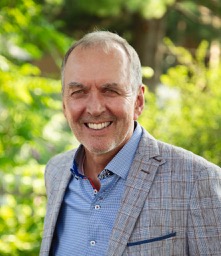
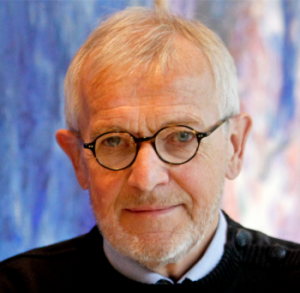
Born in Belgium, Halzen received his Master’s and PhD degrees from what is now KU Leuven, Belgium, and has been on the physics faculty at UW–Madison since 1972; in 2021, Halzen was named a Vilas Research Professor. He has been a fellow of the American Physical Society since 1994 and was awarded their APS Medal for Exceptional Achievement in Research in 2026, is a member of the National Academy, and is the recipient of numerous awards, including the 2014 Smithsonian American Ingenuity Award, the 2015 Balzan Prize, a 2018 Bruno Pontecorvo Prize, the 2019 IUPAP Yodh Prize, the 2021 Bruno Rossi Prize, the 2021 Homi Bhabha Award, and honorary doctorates at several universities.

He is perhaps foremost the principal investigator of the IceCube Neutrino Observatory, a project he initiated in the late 1980s that eventually transformed a cubic-kilometer of natural Antarctic ice below the National Science Foundation’s South Pole station in a particle detector. IceCube’s first observations of high-energy cosmic neutrinos garnered the 2013 Physics World Breakthrough of the Year Award. IceCube provided evidence of high-energy neutrino emission from the vicinity of supermassive black holes hiding in the dense cores of active galaxies, which turns out to be a first clue in figuring out where cosmic rays originate, a longstanding puzzle in astronomy stemming from the discovery of cosmic rays more than a century ago. Recently, IceCube finally discovered neutrinos originating in our own Milky Way.

Halzen is the co-author of Quarks and Leptons, a textbook on modern particle physics that continues to be used extensively throughout college campuses today. He has more than one thousand publications to his credit and his essay “Antarctic Dreams,” about the early days of AMANDA, IceCube’s precursor, was featured in The Best American Science Writing 2000.

Dan Hooper

Position title: Professor, WIPAC Director

Pronouns: he/him/his

Email: dwhooper@wisc.edu

Publications

Website: WIPAC

Research Interests: Particle astrophysics and cosmology

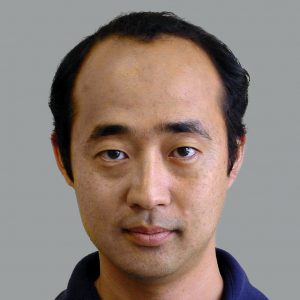
Profile photo of Dan Hooper

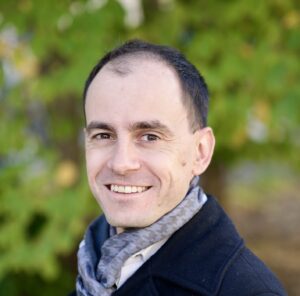
I’m a theorist who works near the interface of particle physics, astrophysics, and cosmology. Many of my papers are on dark matter, high-energy neutrino astronomy, gamma-ray astronomy, early universe cosmology, and physics beyond the Standard Model.

Rogerio Jorge

Position title: Assistant Professor

Email: rogerio.jorge@wisc.edu

Phone: (608) 265-2722

Chamberlin Hall 3281

CV

Google Scholar

Website: UWPlasma

Research Interests: Fusion Energy, Plasma Physics, Energy

Photo of Rogerio Jorge

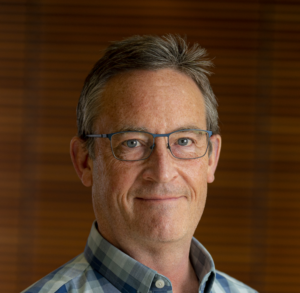
Rogerio Jorge is an Assistant Professor at UW-Madison, USA. Before moving to Madison, he was the Principal Investigator of an EUROfusion’s Enabling Research Grant at IST Lisbon, Portugal, and an FCT CEEC Grant at the Junior Researcher level. At IST, he worked on fusion energy, in particular stellarator optimization, and was the Professor of the Classical Electrodynamics course. Previously, he was a Postdoctoral Researcher at the Max-Planck Institute for Plasma Physics, Greifswald, Germany, and an Alexander von Humboldt Research Fellow. From 2019-2021 he was a Postdoctoral Research Associate at the University of Maryland, College Park, USA. He is interested in the study of plasmas for fusion energy and in the description of three-dimensional magnetic fields. Rogerio obtained his bachelor’s and master’s degrees in Engineering Physics at IST, Lisbon (Portugal), and his Ph.D. at IST and EPFL, Lausanne (Switzerland) under the IST-EPFL Joint Doctoral Initiative. For his Ph.D. thesis, which obtained a unanimous jury classification of Pass with Distinction and Honour, he received the 2020 EPS-PPD Ph.D. Research Award (equivalent to the Marshall N. Rosenbluth Outstanding Doctoral Thesis Award in the USA) and the EPFL Physics Doctoral Thesis Award. He is also a member of the “Simons Collaboration on Hidden Symmetries and Fusion Energy”, the first Simons Foundation Mathematical and Physical Sciences Award supporting fusion science that has been granted to an international team of scientists and mathematicians from eight U.S. universities and four international institutions.

Elio König

Position title: Assistant Professor

Pronouns: he/him/his

Email: elio.koenig@physics.wisc.edu

Phone: (608) 263-7475

Chamberlin Hall 5219

Google Scholar

Websites: König Group, Website

Research Interests: Condensed Matter Theory: Interconnections of quantum materials and quantum information. Strongly correlated electron systems, quantum spin liquids, Kondo problem, quantum transport, quantum emulators, quantum criticality, ...

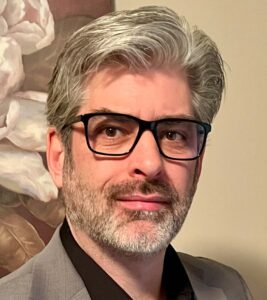
profile photo of Elio Koenig