Month: July 2026
UW-Madison research on planetary engulfment is featured in the New York Times
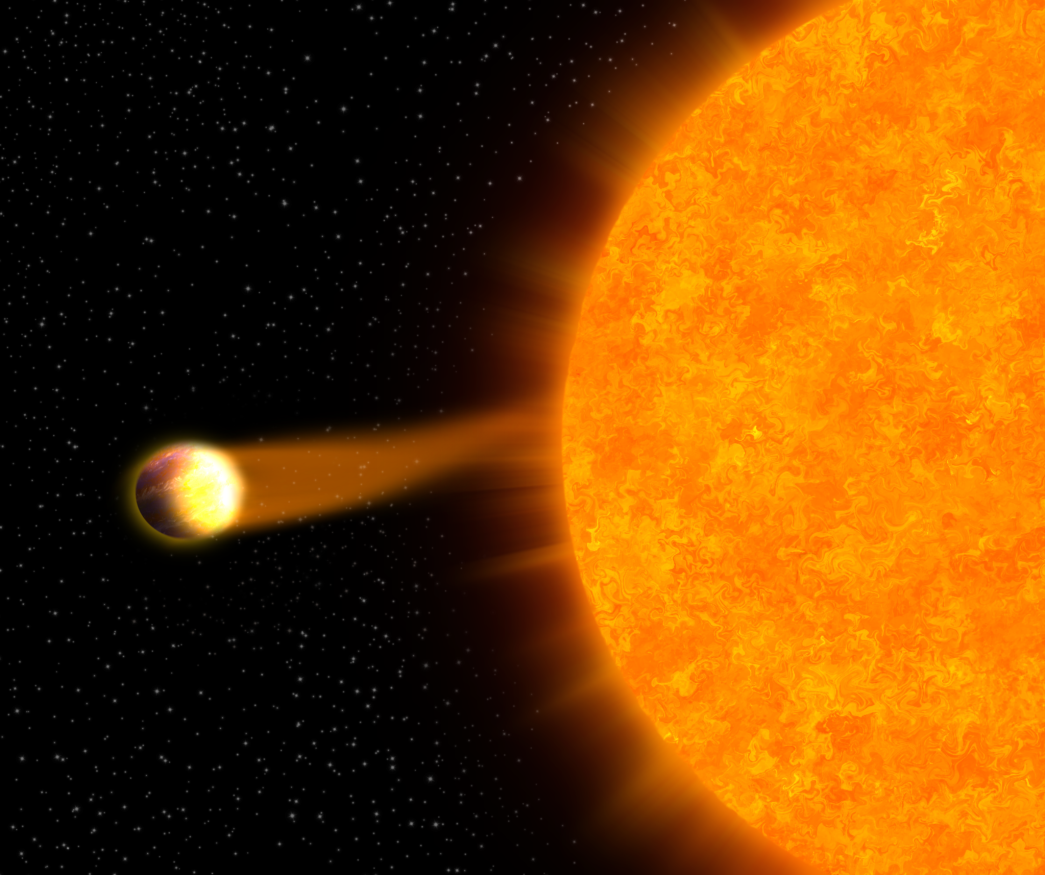
Two recent publications led by UW-Madison astrophysicists were featured in a July 9 New York Times article on planetary engulfment, the process by which a star consumes an orbiting companion. Both center on TOI-5882, an evolved subgiant star hosting a massive brown dwarf (22 Jupiter masses) on a tight, 7-day orbit, and together they reconstruct both the chemical fingerprint and the physical fate of that doomed companion.
The first paper (Kotten et al. 2026) shows that TOI-5882 carries an unusually strong lithium signature, best explained by the star having engulfed a super-Earth to Neptune-mass planet. The second (Narayan et al. 2026) develops a new, self-consistent framework for how tides drain orbital energy and angular momentum from the companion, demonstrating that internal gravity waves accelerate the brown dwarf’s inspiral far faster than classical models predict.
The work was led by two former UW-Madison undergraduates: Brooke Kotten, a former astronomy and physics major who is now an NSF Graduate Research Fellow at the University of Michigan, and Ritvik Sai Narayan, an astronomy major now heading to MIT this fall. Both students were mentored by Professor Soares-Furtado (Depts of Physics and Astronomy), who directed Brooke’s project and co-mentored Ritvik’s alongside Professor Rich Townsend. Townsend (Dept of Astronomy), who holds a Physics affiliation, played a key role in developing the computational model the team built to understand the fate of the brown dwarf. That two undergraduates drove research at this level speaks to the mentorship and research opportunities UW-Madison offers.
This project is closely aligned with the goals of WiCOR (Wisconsin Center for Origins Research; Physics and Astronomy are both department members). When a star consumes a planet, traces of the planet’s chemical makeup are left behind in the stellar atmosphere, allowing us to reconstruct its bulk composition. This matters for the search for life because a planet’s ability to support life depends largely on its interior chemistry. That chemistry determines whether the planet can form a rocky surface, maintain a protective magnetic field, and create an atmosphere. That interior chemistry is normally hidden beneath clouds and surface layers. Engulfment is one of the only ways to probe far beneath a planet’s atmosphere and determine the bulk composition of its interior. Stars like TOI-5882 provide a rare window into the ingredients that determine whether worlds like these could ever support life.
Matt Otten receives an NSF CAREER award!
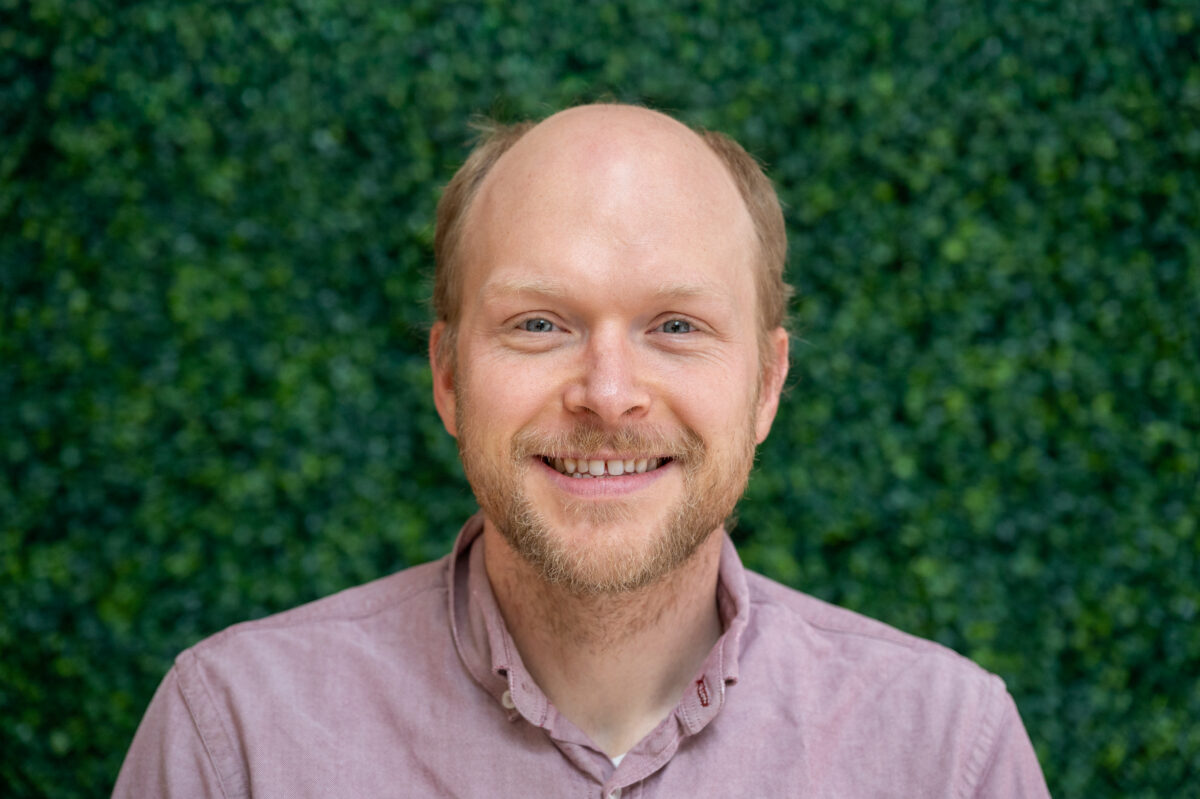
Congrats to Matthew Otten, Assistant Professor of Physics, for being selected for an NSF CAREER award. The 5-year award will support Otten and his group’s research on achieving practical quantum advantage for electronic structure on early-fault-tolerant-quantum (EFTQ) devices.
Such devices, with approximately 100 logical qubits capable of approximately one million gates are expected to appear within this decade, yet a compelling demonstration of quantum advantage for a problem of practical interest in electronic structure is still elusive. This project tackles that challenge with CANOE, the Classically Assisted Non-Orthogonal Eigensolver, a hybrid wavefunction framework that variationally combines a state-of-the-art classical expansion with additional quantum states stored on a quantum processor. Preliminary results demonstrate that such a wavefunction ansatz has powerful expressivity, but there are several bottlenecks that need to be addressed.
“To move CANOE from theory to a practical demonstration on quantum hardware, we will develop robust, classical generalized eigensolvers; utilize shot-frugal measurement methods; develop adaptive techniques for co-selection of classical and quantum states; and rigorously benchmark against state-of-the-art classical HPC ground state energy solvers.” Otten says. “This work will develop and distribute open-access software products that will provide unique capabilities for utilizing EFTQ devices and for simulating electronic structure at unprecedented accuracy. Fundamental advancements in the various techniques utilized will create a more nuanced understanding of the role of classical and quantum information in electronic structure.”
In addition to an innovative research component, this project strongly aligns with the broad NSF goals of growing participation in the QISE workforce and building a STEM-literate citizenry. It will train a new group of quantum-ready computational scientists through an integrated pipeline that couples research, education, and open dissemination. Graduate and advanced undergraduate students will learn EFTQ through modules embedded into a new course, Quantum Algorithms and Error Correction, and gain industry-aligned experience via internships through existing partnerships.
“Our current plan is to utilize our new methods annually during the Wisconsin Summer School on Quantum Science and stream it to Chicago Quantum Exchange member institutions.”, Otten says. “This will deliver hands-on quantum-programming labs.” All algorithms and data will be released under permissive licenses in a dedicated repository and contributed to leading quantum and resource-estimation toolchains, ensuring that researchers without hardware access can reproduce and extend the work. These activities will broaden participation in quantum information science, accelerate technology transfer to industry, and create durable community infrastructure for utility-scale quantum chemistry on EFTQ devices. The downstream societal benefits of improved understanding of strongly-correlated systems can have impacts on nitrogen fixation, battery chemistry, and corrosion materials.
The Faculty Early Career Development (CAREER) Program is an NSF-wide activity that offers the Foundation’s most prestigious awards in support of early-career faculty who have the potential to serve as academic role models in research and education and to lead advances in the mission of their department or organization. Activities pursued by early-career faculty should build a firm foundation for a lifetime of leadership in integrating education and research.