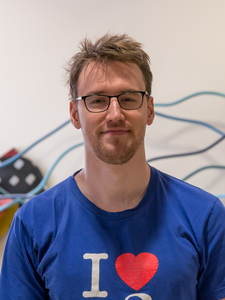
Josh Weber earns L&S Academic Staff Teaching Excellence Award

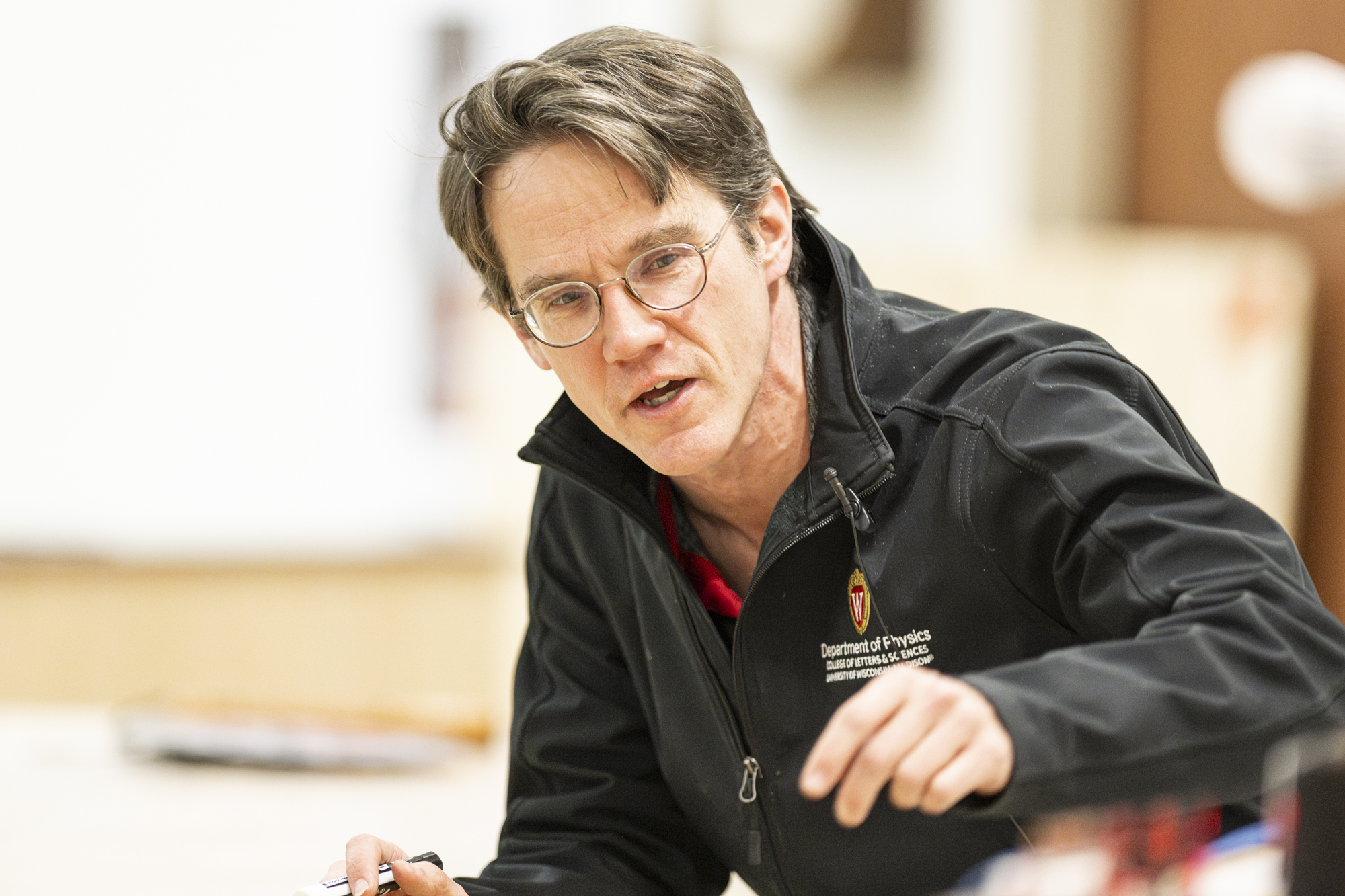
Congrats to Josh Weber for earning a College of Letters & Science Academic Staff Teaching Excellence Award!

Sometimes, the path to teaching excellence is swift and measured. Despite joining the instructional team in the Department of Physics just four short years ago, Joshua Weber has already made his mark, impressing both his colleagues and the students he teaches.

Weber is the course manager and primary instructor for Physics 201 and 202, the two-semester introductory courses taken by nearly 1,000 future engineering students. He has worked closely with his teaching assistants — the same teaching assistants who compete to work with him and whose classes he steps in to cover when they’re ill or indisposed — to adapt traditional physics labs into structured quantitative labs, in which students focus on building lab skills that allow them to “think like scientists” instead of just reproducing results they’ve seen in class. Weber views his role as an instructor as a facilitator, creating a welcoming environment that sparks collaborative learning.

He’s clearly winning the hearts and expanding the minds of his students. As one student recently shared with one of Weber’s TAs:

“Josh is really nice and a great instructor. He led my discussion section once, and I felt nervous, because I felt kind of rusty on the chapter we were working on. But he said, ‘I’m a lot more scared of you than you are of me’ kind of as a joke, and it set the tone for the class and didn’t make it feel like our big scary professor was going to run the discussion section and eat us alive for not being an expert on the material.”
Sam Kramer, Benjamin Beyer named L&S Teaching Mentors

This post is adapted from the L&S teaching mentor website

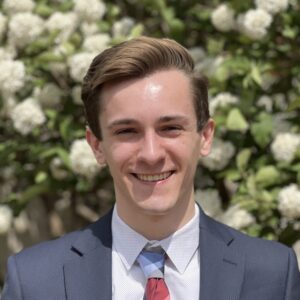
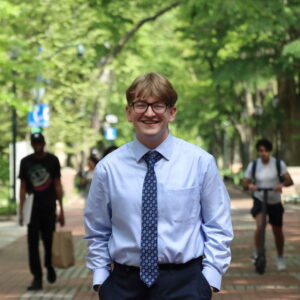
L&S announced their 2026 Teaching Mentors, including physics PhD students Sam Kramer and Benjamin Beyer. Kramer earned the additional honor of being named a Lead Teaching Mentor.

The L&S Teaching Mentors are the heart of our college level Teaching Assistant (TA) Trainings. They are exceptionally passionate and knowledgeable teachers with proven track records for teaching excellence who work closely with the L&S TA Training and Support Team to facilitate various trainings and mentor L&S TAs. Each Teaching Mentor is chosen through a competitive selection process for their enthusiasm and capacity to help others develop as effective and equitable teachers. They not only serve as role models, but also as sources of support and knowledge for both new and returning TAs.

Lead Teaching Mentors have served as Teaching Mentors more than once and take on an additional leadership role within the program. They support first-time Teaching Mentors as they learn to facilitate the TA Training curriculum. They also work with L&S TA Training and Support Team leadership to strengthen program offerings. In short, they are an invaluable source of expertise, creativity, and serve as deeply valued collaborators.

profile picture of Sam Kramer
Sam Kramer

Sam is a fourth-year Ph.D. candidate in the Department of Physics and has been teaching for Physics 202, a course for engineering major undergraduates that focuses on electricity, magnetism, and optics, since arriving in Madison. Sam also taught for a similar course as an undergraduate at Saint Louis University. In this role, he leads both discussions, which focus on problem solving, and labs, which provide hands-on experience with the concepts being taught. Physics can be an overwhelming subject, so Sam tries to distill the material into manageable chunks for the students, emphasizing the broader concepts underlying the formulas students use and drawing explicit connections between parts of the curricula. This is meant to develop the dynamic problem solving skills students need when encountering problems they have not seen before.

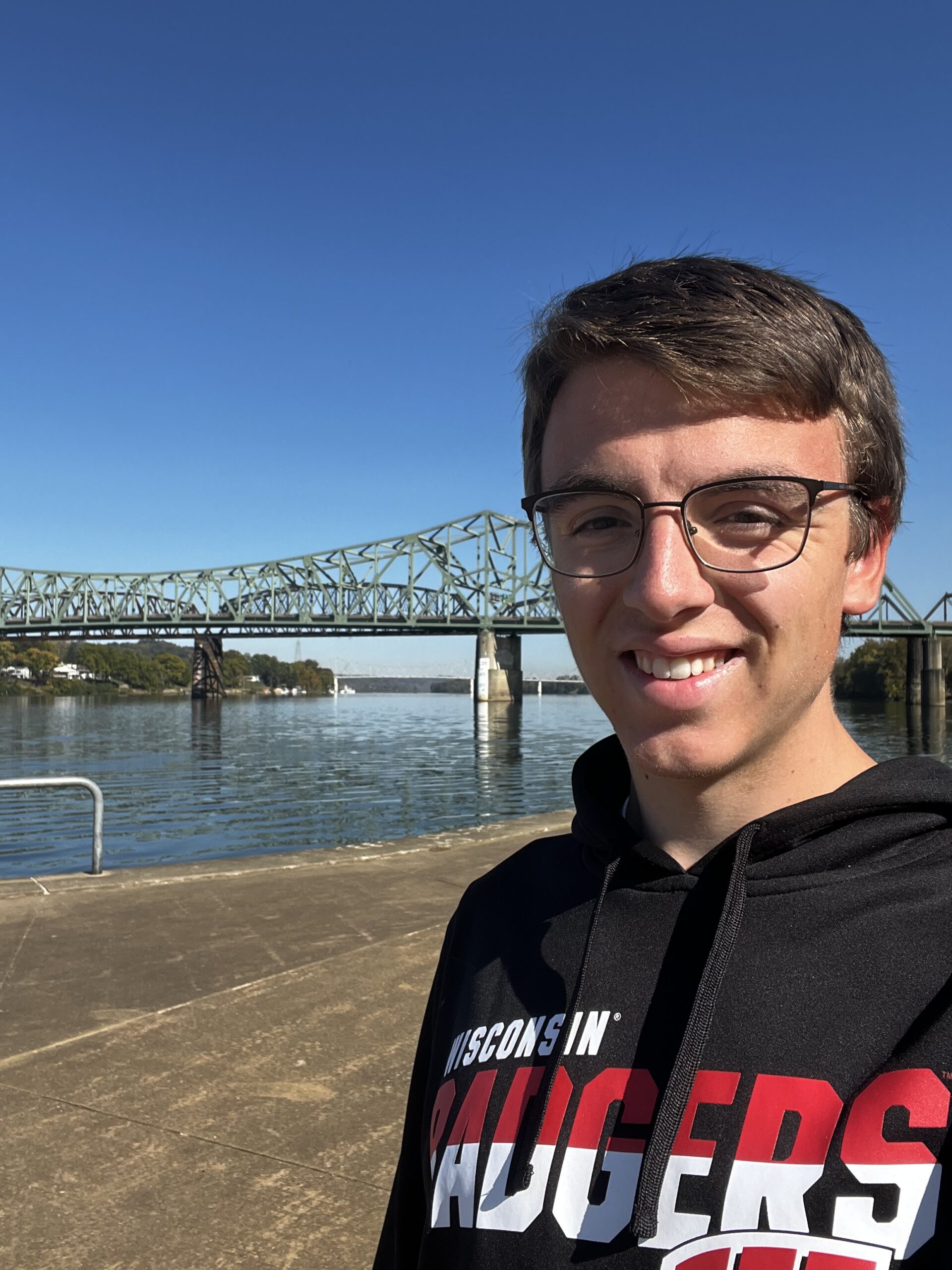
Profile photo of Benjamin Beyer
Benjamin Beyer

As an undergraduate, Benjamin began teaching introductory courses in physics. Since matriculating as a graduate student in the Department of Physics, Benjamin has continued to teach a wide range of courses, from courses emphasizing experimental laboratory skills to courses with a theoretical flavor. His approach blends connecting with students with breaking down complicated subjects, such that students can connect with the material in the context of their own experiences. He believes that learning physics is just as much about learning how to troubleshoot and make mistakes safely as it is about getting the right answer. Ultimately, his favorite part of teaching is helping to take the intimidation factor out of physics and watching students gain confidence in their own abilities.

Dan McCammon awarded Distinguished Career Prize

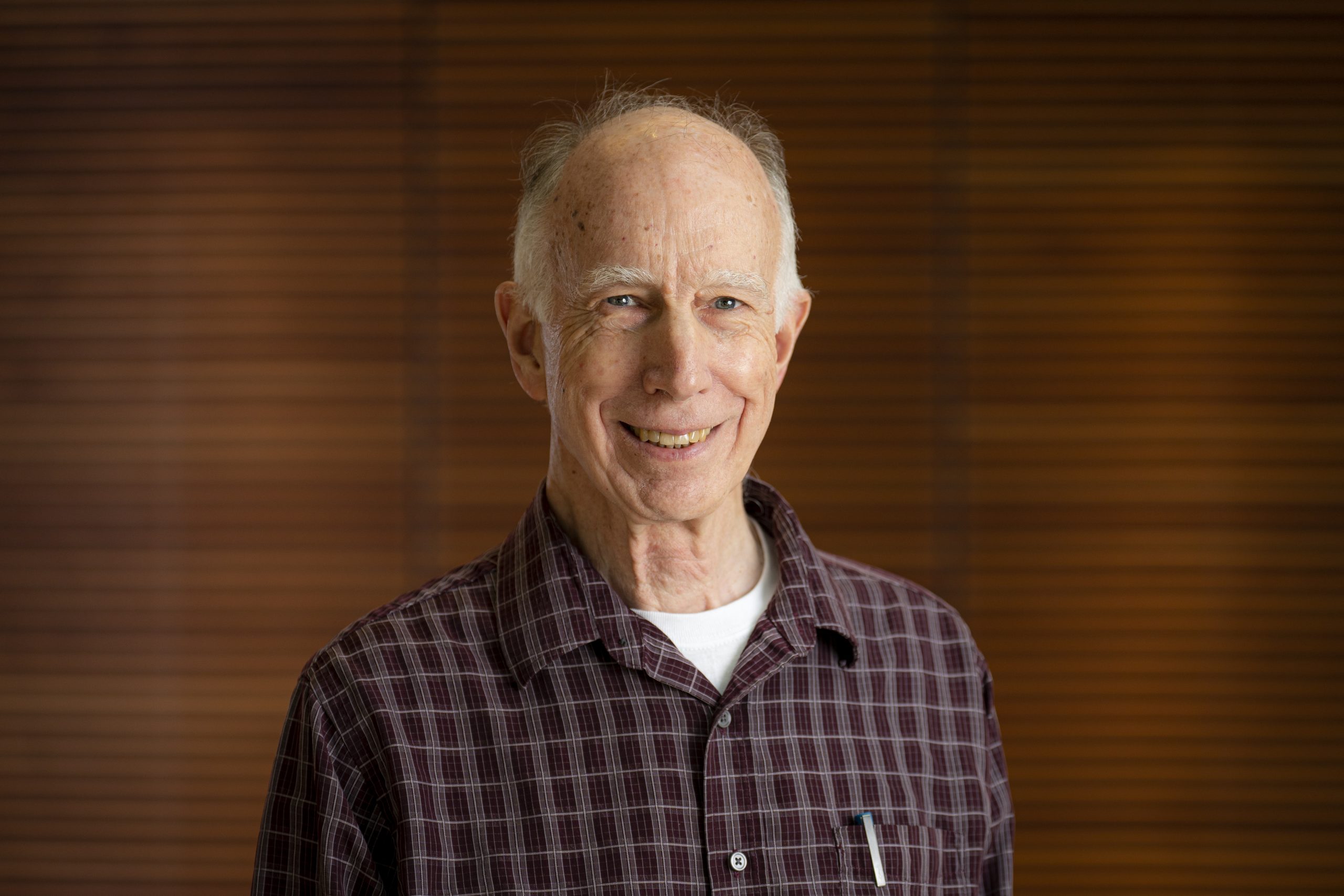
profile photo of Dan McCammon
Dan McCammon

Congrats to Prof. Dan McCammon for earning the Distinguished Career Award from The American Astronomical Society’s (AAS) High Energy Astrophysics Division (HEAD) for his pioneering work on the development of microcalorimeters that has led to breakthroughs in X-ray astronomy and on soft diffuse X-ray background.

The HEAD Distinguished Career Prize is awarded at the time of the Division Meeting to recognize an individual high-energy astrophysicist who has made outstanding contributions to the field of high energy astrophysics throughout their career. Outstanding contributions include a body of important research results (observational, theoretical or experimental) which have led to ground-breaking results in high-energy astrophysics, and/or a career of mentorship to a new generation of high-energy astrophysicists, especially if this mentorship helped to support under-represented or under-resourced scientists and increased the diversity of the HEA community. The winner gives an invited talk at the Divisional Meeting in the award year. The prize carries a cash award of $1500.

AAS announced many 2025 prizes today; the full list can be found at their website.

This post is adapted from the AAS news release and website linked within the text.

Physics major Caleb Youngwerth wins poster prize at APS Eastern Great Lakes meeting

profile photo of Caleb Youngwerth
Caleb Youngwerth

Congrats to physics, astronomy-physics, mathematics and french major Caleb Youngwerth on winning the Meeting Award for Undergraduate Student Poster at the Fall 2024 meeting of the Eastern Great Lakes Section of APS!

Youngwerth’s poster, entitled, “Harnessing Molecular Simulation of the DLVO Potential to Engineer New Battery Technologies,” was presented at the meeting held October 18-19 at Marietta College in Ohio. The work was conducted in the chemical and biological engineering group of Prof. Rose Cersonsky.

The award was announced at the meeting and comes with a cash prize.

For more info, read Chemical and Biological Engineering’s story about Caleb: https://engineering.wisc.edu/blog/student-wins-award-for-research-on-colloidal-gels/

Jim Reardon wins WISCIENCE Lillian Tong Teaching Award

Each year, the University of Wisconsin–Madison recognizes outstanding academic staff members who have excelled in leadership, public service, research and teaching. These exceptional individuals bring the university’s mission to life and ensure that the Wisconsin Idea extends far beyond the campus and the state. Ten employees won awards this year, including Dr. Jim Reardon, Director of Undergraduate Program with the department of physics.

Jim Reardon’s love of running and his excellence as a physics instructor recently came together in the classroom in a big way with Physics 106: The Physics of Sports, a course he developed and now teaches. The new course applies physical principles to competitive sports, helping students better understand athletic performance. It’s proven exceptionally popular, attracting almost 140 students in only its third semester.

action shot of Jim Reardon teaching
Jim Reardon, director of undergraduate program in the Department of Physics at the University of Wisconsin–Madison, is pictured while teaching during a Physics 106 class held in Chamberlin Hall on March 20, 2024. Kaul is one of ten recipients of a 2024 Academic Staff Excellence Award (ASEA). (Photo by Bryce Richter / UW–Madison)

Reardon’s expertise at course development, his mastery at instruction and his exemplary support of teaching assistants have made him indispensable to the Physics Department. As director of the undergraduate program, he implemented standardized assessments in the department’s large introductory courses. This provided a baseline for successful course modifications and allowed nationwide peer assessment comparisons. As the administrator of the teaching assistant program, Reardon expertly matches the strengths of TAs with the needs of the department.

Reardon is no less valued in the classroom. Students routinely give him the highest of marks. Writes one, “I have never seen a professor or teacher work so effectively and patiently to ensure his students understood the information.”

“Jim is unique in his broad and ready grasp of the subject matter combined with a passion for teaching and making sure that ALL students have access to that subject matter.”

— Sharon Kahn, graduate program manager, Department of Physics

Blending the rules: how physics helps paint a new picture for artists of all mediums

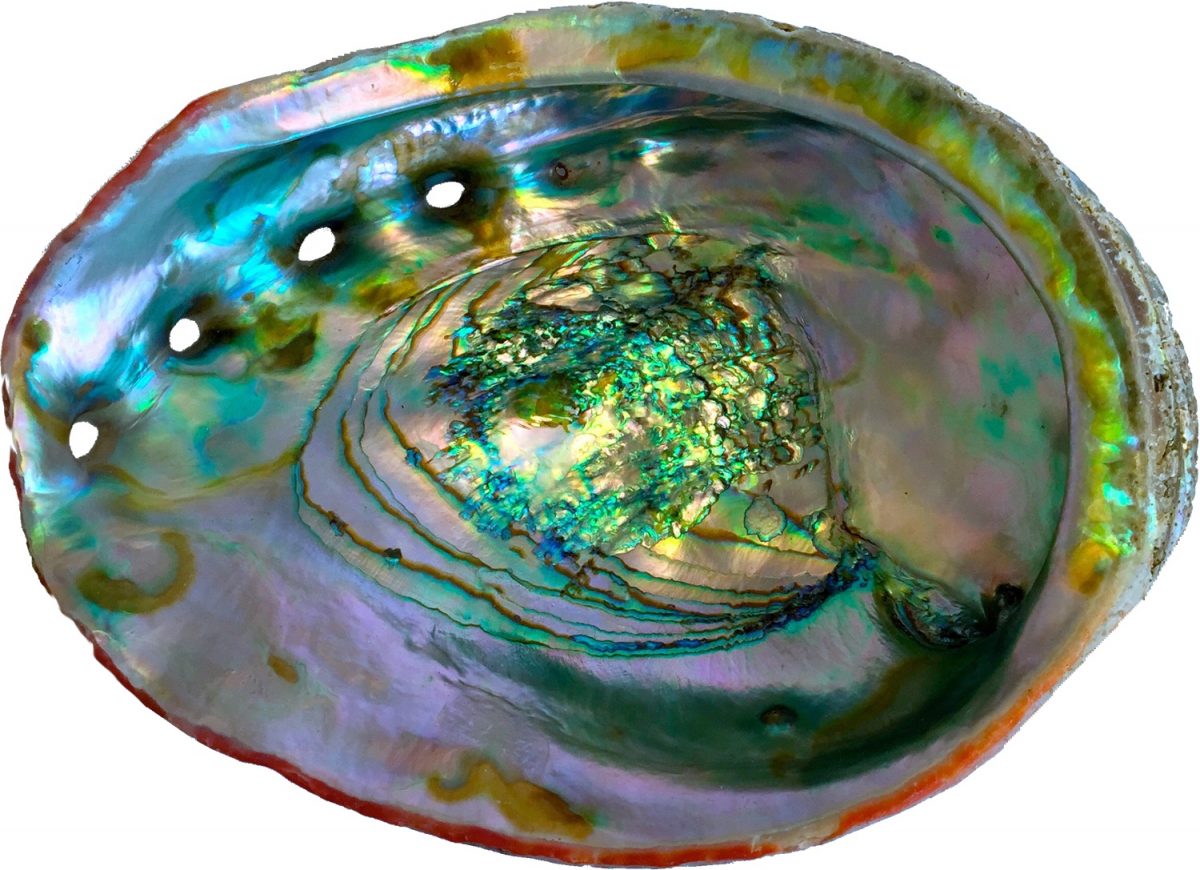
an iridescent, oval-shaped shell

This post was written by Rachael Lee, a student science writer with University Communications.

A singer or a violinist’s performance produces sound waves that echo across a concert hall. A painter may mix different paint colors to create a new hue. Dancers use forces like gravity and inertia to produce stunning displays.

At first glance, the arts and physical sciences may look like very separate disciplines. However, many art forms are based on physics.

One hugely popular physics course at the University of Wisconsin–Madison shows how the arts and physics are, in fact, inextricably linked. Physics in the Arts (Physics 109) examines sound and light using examples from the arts. Physics in the Arts has been taught at UW–Madison since 1969, when it was started by physics professors Willy Haeberli and Ugo Camerini. Today’s instructors, professors Pupa Gilbert and A. Baha Balantekin, are continuing and extending the class’s mission to bridge the two disciplines to benefit both physicists and artists in understanding and appreciating each other’s fields.

Balantekin says that the interdisciplinary course shows the rest of the campus community that physics is not just a technical subject. By demonstrating physics in a medium familiar to artists, it helps provide a new perspective and appreciation for the sciences. “If you’re a musician, it’s much better to learn about the physics behind how your instrument works, or the physics behind how colors mix. It’s more interesting, and then it still helps them to learn,” he says.

Read the full story

Three department members earn teaching accolades

Congratulations to the following Physics Department members who recently earned teaching awards:

  • Dr. Daniel Thurs won a 2021 Alliant Energy James R. Underkofler Excellence in Teaching Award. These awards are funded by an endowment from the Alliant Energy Foundation and are intended to recognize and reward extraordinary teachers at UW System universities within Alliant Energy’s service area. The award pays tribute to Thurs’s dedication as a teacher, and his ability to communicate subject matter effectively and inspire an enthusiasm for learning in his students.
  • Daniela Girotti-Hernandez and John Podczerwinski were both named 2021 L&S Teaching Fellows. The Teaching Fellow Award is granted to TAs from the College of Letters and Science who have achieved outstanding success as students and teachers. Winners of this award serve as instructors at the L&S Fall TA Training, which takes place at the start of the fall semester and welcomes 300-400 new and experienced TAs from across campus.

Gage Bonner earns 2020 Teaching Award

profile picture of Gage Bonner
Gage Bonner

Congrats to physics grad student Gage Bonner for earning a 2020 College of Letters & Sciences Continuation of Study teaching award!

This new award category recognizes graduate students in L&S who provided exceptional continuity of instruction support to their department or delivered exceptional student experience in a remote instructional setting during the COVID-19 pandemic.

Bonner was nominated for his work as a TA in Physics 109, Physics in the Arts, by one of the course’s instructors, Prof. Pupa Gilbert. Physics 109 is a quantitative-reasoning course offered to non-science majors, typically serving more than 200 students.

“The students are terrified of physics, and are not quantitative thinkers, thus it is especially important for Physics in the Arts TAs to be kind, friendly, and not intimidating,” Gilbert says. “Gage excels at all these challenges, and teaches masterfully. He is kind, intelligent, knowledgeable, and always in a good mood, making everyone feel comfortable and not intimidated.”

Gilbert nominated Bonner for the Continuation of Study award because of how effectively he adapted to the changes forced by the COVID-19 pandemic. For example, because in-person labs were no longer an option, Gilbert selected online labs, and asked the TAs to develop a series of interactive questions associated with each online experiment to help the students learn by doing. Bonner excelled at developing these questions. She also noted how well he interacts with students through the online Zoom lectures, helping to keep conversations going and being knowledgable, kind and effective with online instruction.

Based on course and TA evaluations, the students agree with Gilbert. Said one student in an evaluation:

“Gage has been a really awesome TA. He makes labs run so smoothly, responds to questions quickly and effectively, and reminds us [of] vital information. He was also super helpful in lectures. Letting the teachers know if there was a technical issue or question. He also made a really friendly and comfortable learning environment even with the restraints of BBC collaborate ultra.”

UW–Madison employs over 2,100 teaching assistants (TAs) across a wide range of disciplines. Their contributions to the classroom, lab, and field are essential to the university’s educational mission. To recognize the excellence of TAs across campus, the Graduate School supports the College of Letters & Science (L&S) in administering these awards.

Bonner has been a graduate student and TA in the department since Fall 2016.