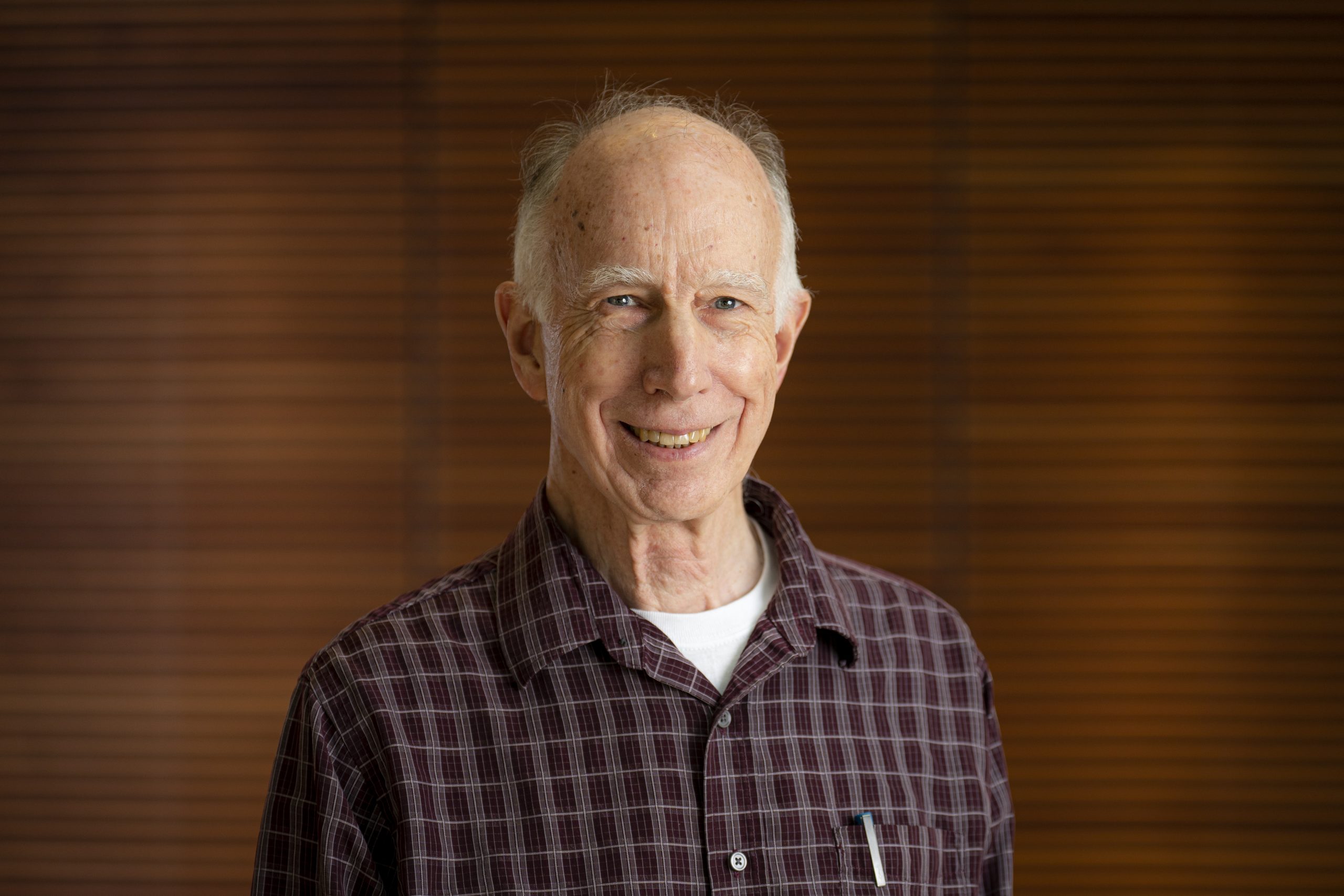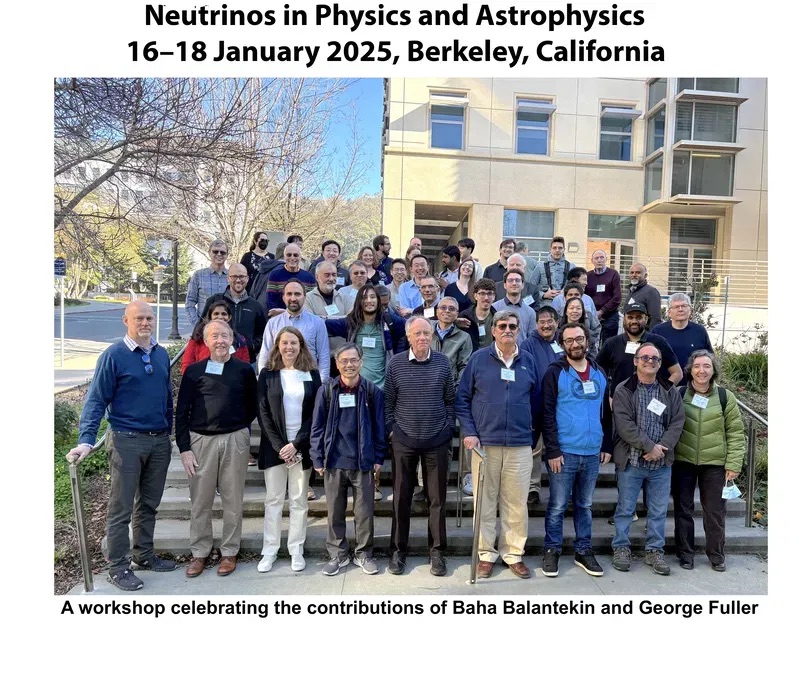
The illustrious career of Baha Balantekin, the Eugene P. Wigner professor of physics at UW–Madison, was celebrated recently at the Neutrinos in Physics and Astrophysics Workshop through the Network for Neutrinos, Nuclear Astrophysics, and Symmetries (N3AS) Physics Frontier Center.
Balantekin works at the intersection of nuclear physics, particle physics, and astrophysics. For much of his career, he has studied theoretical aspects of neutrinos originating in the Sun, supernovae, or neutron star mergers. He has helped pioneer the field known as neutrino astronomy.
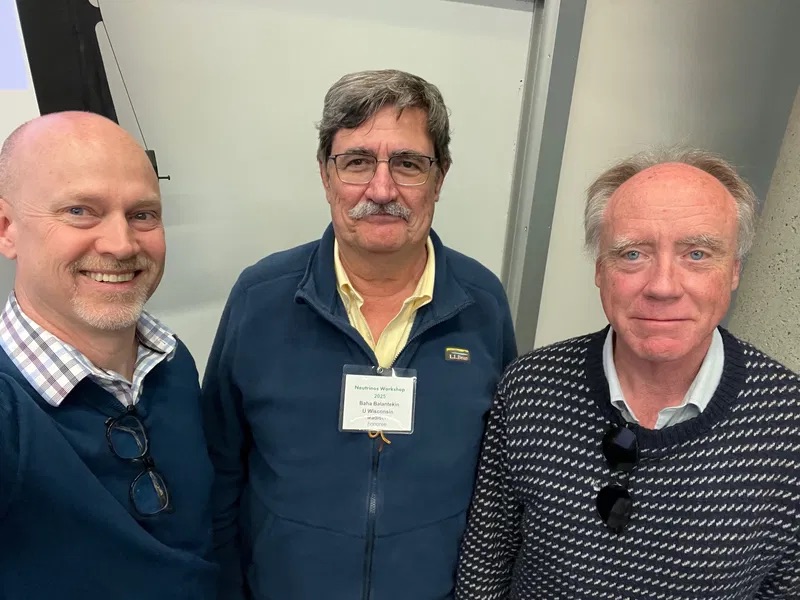
“Even just a few decades ago, if you said ‘neutrino astronomy,’ most physicists would have snickered. That’s because astronomy is about observations and neutrinos are almost impossible to detect,” says John Beacom, PhD ’97, distinguished professor of physics and astronomy at the Ohio State University. “But, over time, physicists have helped to make this seemingly impossible field into something real and vibrant. The observations of astrophysical neutrinos that have been made have been essential to understanding our Sun, supernovae, and distant galaxies.”
Balantekin and George Fuller, a distinguished professor of physics at the University of California, San Diego, have helped lead the field of neutrino astrophysics through both their scientific work and their mentoring of junior scientists. To honor both scientists’ significant and ongoing contributions to the field, three of their former students organized the workshop: Beacom, a former student of Balantekin’s, and Fuller’s former students Gail McLaughlin, distinguished university professor of physics at North Carolina State University and Yong Zhong Qian, professor of physics and astronomy at the University of Minnesota. The event was held Jan 16-18 at the University of California, Berkeley.
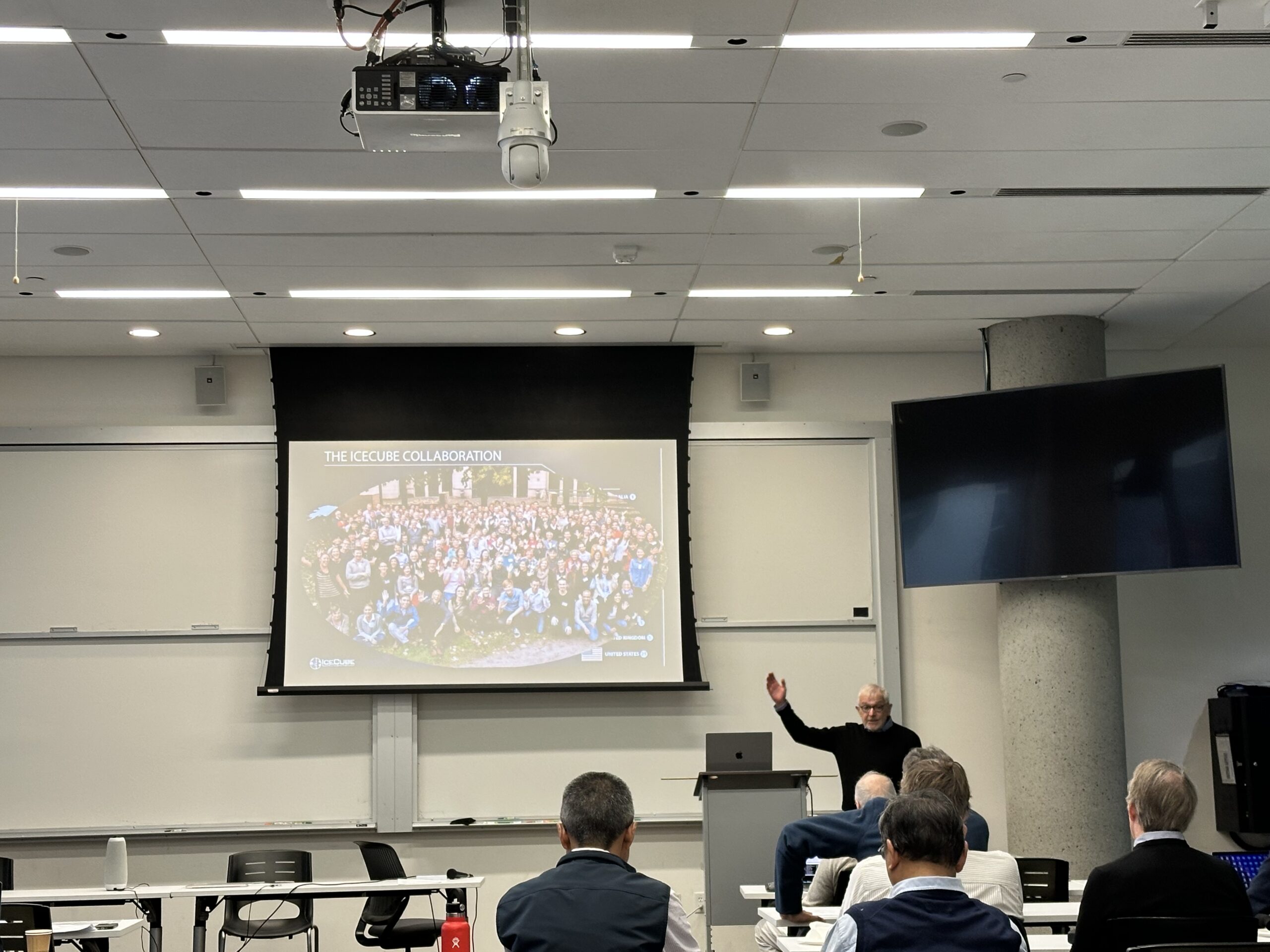
Francis Halzen, a current colleague of Balantekin’s at UW–Madison, was one of the speakers. Other attendees included UW–Madison physics professor Pupa Gilbert and professor emerit Sue Coppersmith.
John Beacom and Pupa Gilbert contributed significantly to this story