Congratulations to Prof. Wu on her retirement!

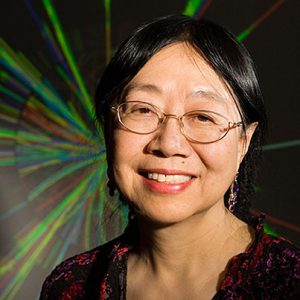
profile photo of Sau Lan Wu
Sau Lan Wu | Photo: Jeff Miller, UW–Madison

Congrats to UW–Madison physics Prof. Sau Lan Wu, who announced her retirement effective January 1, 2026. One of the first two women on the physics faculty when she joined as an assistant professor in 1977, her nearly 50-year career stands as one of the most consequential in modern experimental particle physics.

“Sau Lan is truly remarkable and irreplaceable,” says UW–Madison experimental particle physicist and department chair Kevin Black. “If I accomplish even one-third of what she has in her career, I will consider myself incredibly successful.”

Rising from humble beginnings in Hong Kong to becoming a central figure in high energy physics, Wu’s path began at Vassar College, where she graduated summa cum laude in 1963. She then earned her MA and PhD from Harvard, part of the first cohort of women ever awarded graduate degrees directly from the university. After a postdoctoral fellowship and research appointment at MIT, she joined UW–Madison as an assistant professor in 1977, was promoted to associate professor in 1980, and to full professor in 1983. She earned the UW–Madison titles of Enrico Fermi Professor, Hilldale Professor, and Vilas Professor.

From her earliest days in the field, Wu gravitated toward the biggest scientific frontiers. She played key roles in three landmark particle discoveries: the charm quark in 1974 as part of Samuel Ting’s MIT/Brookhaven team; the gluon in 1979 through her pioneering work identifying three-jet events at DESY; and the Higgs boson in 2012, where her ATLAS group helped lead analyses of the H→γγ and H→ZZ*→4ℓ decay channels. Each discovery reshaped the Standard Model, and collectively they earned her a reputation as one of particle physics’ most influential experimentalists.
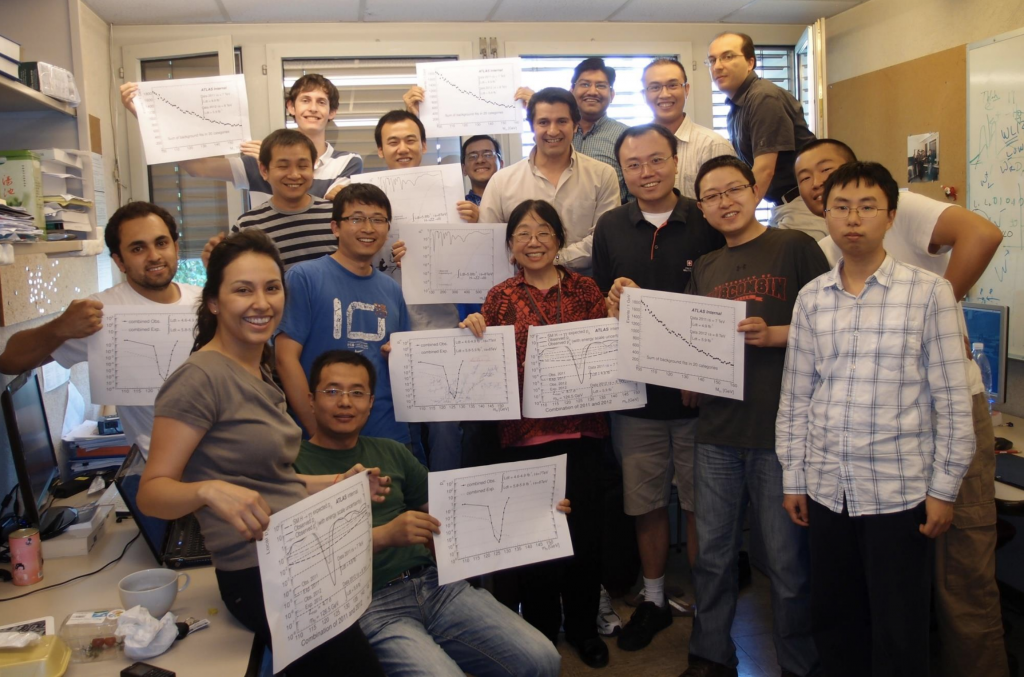
a group of very happy scientists pose for a shot, all holding a printout of the same graph
The UW–Madison ATLAS group at CERN at the time of the Higgs discovery all celebrated with printouts of the data confirming 5sigma. | Provided by Sau Lan Wu

Wu is a Fellow of the American Physical Society and the American Academy of Arts & Sciences, a recipient of the European Physical Society Prize, and shared the 2025 Breakthrough Prize in Fundamental Physics with the LHC collaboration. In 2022, the International Astronomical Union named a minor planet, Saulanwu, in her honor.

Through all these achievements, Wu remained devoted to guiding the next generation of experimental physics. 65 doctoral students completed their PhDs in her group, on major experiments from PETRA to LEP, BaBar, and the LHC. Of her former students and postdocs, 40 now hold faculty positions worldwide, and 18 are permanent staff scientists at major laboratories. Many others have gone on to high-impact roles in national science policy and the technology sector.

Says Steve Ritz, distinguished professor of physics at the University of California Santa Cruz and the Santa Cruz Institute for Particle Physics and a former student with Wu:

“Sau Lan pointed the way toward the most interesting questions, and she made sure we had what we needed for success. We always knew that we could try new approaches to problems and that she had our backs if we hit a bump in the road. She also made sure we didn’t just bury ourselves in our own work: there seemed to be a constant flow of great physicists visiting the group, and Sau Lan introduced us to each one. We were encouraged to attend their seminars and we were invited to lunch and dinner discussions. I now understand that Sau Lan was helping us develop our own sense of belonging in the field, while also pushing us to reach our full potential.”

John Conway, distinguished professor in the Department of Physics and Astronomy at UC Davis and former postdoc in Wu’s group, adds:

“I worked with Sau Lan as a postdoc on the ALEPH experiment at CERN for over five years. It was a fantastic time — her group was super lively and carrying out a lot of different work on the experiment, and which was then brand new. Sau Lan instilled in me the hunger for discovery that I have carried through the rest of my career, and demonstrated what it meant to be truly dedicated to this work. She was an inspiring leader and had genuine concern for the lives and careers of everyone who worked for her. I’ve tried to pay that forward in my own career.”
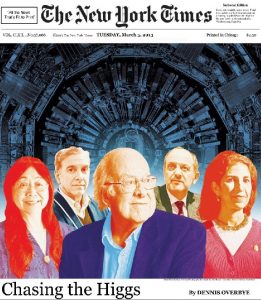
a screenshot of a newspaper front page, with an artistically-rendered photo of 5 key scientists involved in the Higgs discovery
Sau Lan Wu and other Higgs scientists were featured on the cover of the New York Times for a story about the chase for the Higgs boson.

Even in the later stages of her career, Wu remained at the forefront of innovation. She championed the integration of artificial intelligence and machine learning into experimental physics, leading ATLAS’s first event-level anomaly detection study and advancing GNN-based tracking, GAN-based simulation, and early quantum machine learning applications for high energy physics. These efforts have helped prepare the field for the data-intensive future of the HighLuminosity‑ LHC beginning later this decade.

Wu has been featured on the front page of The New York Times, profiled in Quanta and Wired, invited to write for Scientific American, and highlighted in seven books celebrating scientific trailblazers and women in STEM, many aimed at sharing the excitement of discovery with children. The UW–Madison alumni magazine, On Wisconsin, featured her in a lengthy profile in 2019. She has delivered Vassar’s 150th Commencement Address, appeared on the cover of the AIP History Newsletter, and continued to be a sought-after speaker, including keynotes at SLAC in 2024 commemorating the 50th anniversary of the J/ψ discovery.

“Sau Lan is a legend in the field of experimental particle physics,” says Sridhara Dasu, an experimental particle physics professor at UW–Madison. “Her experiences will be inspiring for generations to come.”
 

New Chair to continue department’s strengths, commit to diversity and inclusion

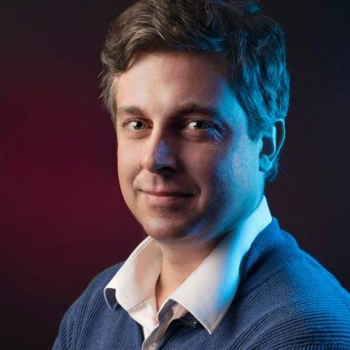
profile photo of Kevin Black
Prof. Kevin Black

The department of physics is pleased to announce that Prof. Kevin Black has been named new department chair. His three-year term began July 1, 2024, succeeding Prof. Mark Eriksson. Black says he is looking to continue the department’s excellence in its mission of research, teaching, and outreach, and to continue developing an intentional commitment to diversity.

“Under Prof. Eriksson’s leadership, our department has attained near-record highs of faculty members as well as graduate and undergraduate students, which will lead to significant successes in our research program,” Black says. “Now, we need to continue to focus on making a commitment to diversity an active component of what we do as a department.”

Two pillars of the department’s mission have always been research and teaching, and Black wants to sustain successes in those areas. He begins his term with over a dozen faculty members who have joined the department in the previous three years, bringing the total number of professors to 56. These faculty members represent a range of seniority levels and a breadth of research fields. He also begins at a time when more students than ever are being taught in department courses.

“Research and education are the core values of a research university,” Black says. “We want to do excellent, cutting-edge research and we want to teach the next generation of scientists.”

Black’s focus on diversity and climate efforts represents a continuing effort from leadership before him. The need to add diversity as a pillar of the department’s mission became evident to him when he saw the list of department chairs who came before him, and he noted that he was the 33rd white male chair out of 35. He acknowledges the challenge that the broader field of physics faces, and specifically at UW–Madison: both lack adequate representation of students from marginalized groups.

“We need to improve diversity at all levels in this department,” Black says. “There’s no magic wand. It takes a concerted, sustained effort and we need to make it a priority going forward.”

Lastly, Black also believes that the department’s commitment to educational outreach is critical to fulfilling the Wisconsin Idea, the idea that education should influence people’s lives beyond the boundaries of the university. The department has a long-standing tradition of engaging in outreach, including over 100 years of running the Physics Museum and over four decades of running The Wonders of Physics outreach program.

“Physics outreach can inspire the next generation to think about the natural universe and think about how things work,” Black says. “In a world which is increasingly driven by soundbites and nonsense on the internet, it’s crucial to encourage and guide young students to think rationally about science and formulate questions and opinions.”

Black joined the faculty as a full professor in 2018 and works with the high energy experiment group on the Compact Muon Solenoid (CMS) experiment at CERN. He had previously been a professor at Boston University. Black earned a bachelor’s degree at Wesleyan University where he worked in an atomic physics lab. He has a doctorate in physics from Boston University, and much of his thesis work was completed on the Tevatron at Fermilab. He was then a postdoc and research scientist at Harvard University, where his work transitioned to the Large Hadron Collider at CERN.

Physics major Nathan Wagner awarded Goldwater Scholarship

This story is modified from one published by University Communications

Physics and mathematics major Nathan Wagner is one of four UW–Madison students named as winners of 2024 Goldwater Scholarships, the premier undergraduate scholarship in mathematics, engineering and the natural sciences in the United States.

The scholarship program honors the late Sen. Barry Goldwater and is designed to foster and encourage outstanding students to pursue research careers.

“I’m so proud of these four immensely talented scholars and all they’ve accomplished,” says Julie Stubbs, director of UW’s Office of Undergraduate Academic Awards. “Their success also reflects well on a campus culture that prioritizes hands-on research experiences for our undergraduates and provides strong mentoring in mathematics, engineering and the natural sciences.”

The other UW–Madison students are juniors Katarina Aranguiz and Scott Chang and sophomore Max Khanov .

A Goldwater Scholarship provides as much as $7,500 each year for up to two years of undergraduate study. A total of 438 Goldwater Scholars were selected this year from a field of 1,353 students nominated by their academic institutions.

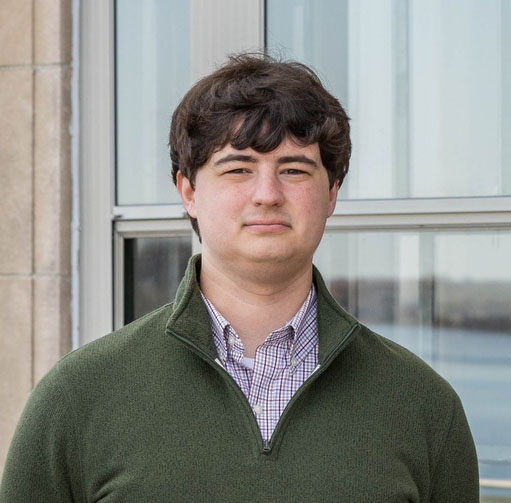
profile picture of Nathan Wagner
Nathan Wagner (Photo by Taylor Wolfram / UW–Madison)

Sophomore Nathan Wagner of Madison, Wisconsin

Wagner is majoring in physics and mathematics. Wagner began research in Professor Mark Saffman’s quantum computing lab in spring 2021 as a high school junior. His first-author manuscript, “Benchmarking a Neutral-Atom Quantum Computer” was recently accepted for publication in the International Journal of Quantum Information. In Summer 2023, Wagner started research with the Physics Department’s High Energy Physics Group, working alongside Professor Sridhara Dasu and others on future particle colliders design research. Wagner was invited to present his research at the Department of Physics Board of Visitors meeting in fall 2023. This summer, he will complete a research internship at Argonne National Laboratory near Chicago, focusing on computational physics. Wagner plans to pursue a PhD in physics and a career at a U.S. Department of Energy national laboratory researching novel carbon-neutral energy generation, quantum computing and networking, nuclear photonics and computational physics.

About the Goldwater Scholarship

Congress established the Barry Goldwater Scholarship and Excellence in Education Foundation in 1986. Goldwater served in the U.S. Senate for over 30 years and challenged Lyndon B. Johnson for the presidency in 1964. A list of past winners from UW–Madison can be found here.