Astrophysics
Velocity gradients key to explaining large-scale magnetic field structure
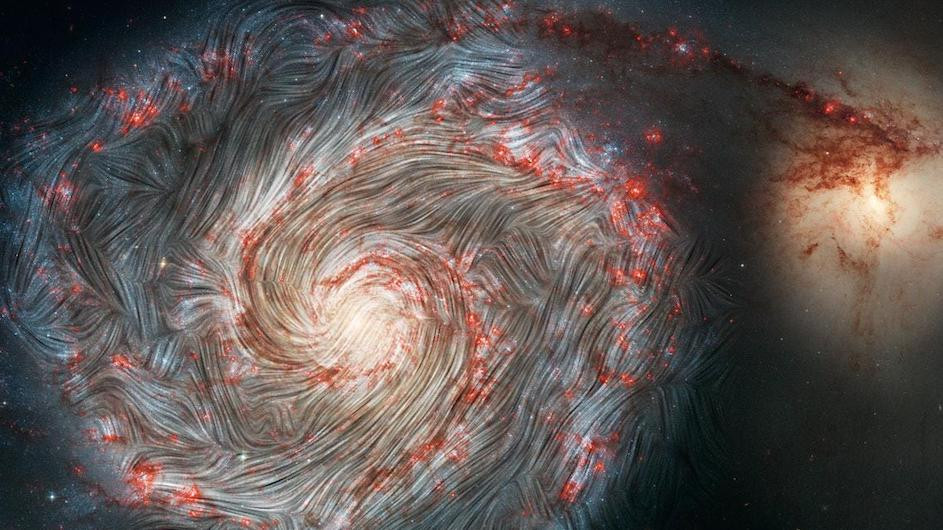
All celestial bodies — planets, suns, even entire galaxies — produce magnetic fields, affecting such cosmic processes as the solar wind, high-energy particle transport, and galaxy formation. Small-scale magnetic fields are generally turbulent and chaotic, yet large-scale fields are organized, a phenomenon that plasma astrophysicists have tried explaining for decades, unsuccessfully.
In a paper published January 21 in Nature, a team led by scientists at the University of Wisconsin–Madison have run complex numerical simulations of plasma flows that, while leading to turbulence, also develop structured flows due to the formation of large-scale jets. From their simulations, the team has identified a new mechanism to describe the generation of magnetic fields that can be broadly applied, and has implications ranging from space weather to multimessenger astrophysics.

“Magnetic fields across the cosmos are large-scale and ordered, but our understanding of how these fields are generated is that they come from some kind of turbulent motion,” says the study’s lead author Bindesh Tripathi, a former UW–Madison physics graduate student and current postdoctoral researcher at Columbia University. “Given that turbulence is known to be a destructive agent, the question remains, how does it create a constructive, large-scale field?”
Before working on three-dimensional (3D) magnetic fields, Tripathi investigated systems with hydrodynamic flows and two-dimensional (2D) magnetic fields. After staring at the movies and images of 3D magnetic turbulence, he noticed similarities in the shapes of large-scale flows and large-scale magnetic field structures. But it wasn’t as simple as applying fluid dynamic theory to magnetic field generation: the former may be solved as a 2D problem, whereas the latter must be solved in 3D, making it a much more complex, difficult-to-solve problem.
Tripathi and his colleagues decided to tackle the problem with two key changes from previous research.
The first difference was the input: a constantly replenished velocity gradient. A cyclist hitting a curb head-on, say, experiences a velocity gradient: the wheels stop, but momentum can cause the cyclist to fly over the handlebars. Velocity gradients exist throughout the universe; for example, within different layers of the sun or when two neutron stars merge. The team reasoned that this gradient is likely important to include while studying 3D magnetic fields.
Second, they ran perhaps the most complex simulation to date of magnetic fields in the presence of an unstable velocity gradient — 137 billion grid points in 3D space. Altogether, they ran around 90 simulations, generating 0.25 petabytes of data and using nearly 100 million CPU hours on the Anvil supercomputer at Purdue University.
Ordered magnetic fields spontaneously emerge out of chaotic, tangled fields. This finding is consistent with astrophysical observations. Streamlines of magnetic fields are 3D-rendered and are colored red–blue by the x-component of the field. Streamlines of the electric current density are shown in green; color represents magnitude. Poloidal fields are displayed on the (y,z)-plane, after averaging them over the azimuthal (x) direction. Credit: Tripathi et al.
“We start our simulations with a flow that has a velocity gradient, then we add some tiny perturbations, like moving one fluid particle infinitesimally, we let that perturbation propagate over the system and grow, and then analyze the data over time,” Tripathi says. “Initially, these perturbations lead to turbulent flows and magnetic fields in small-scale structures, then, over time, they emerge into larger, ordered structures.”
When Tripathi ran the same simulations where the initial velocity gradient had decayed over time, the simulation only produced the chaotic, small-scale patterns. “So that’s really the main key: to have a steady, large-scale gradient in velocity,” he emphasizes.
Adds Paul Terry, physics professor at UW–Madison and senior author of the study: “Magnetic field generation via dynamos has been extensively studied for 70 years, with the frustrating result that the generated fields almost always end up at small scales and highly disordered, unlike observations. This work, therefore, potentially resolves a long-standing issue.”
Though the theory cannot be tested in the distant universe, a lab-based experiment does support the team’s findings: in 2012, colleagues at the Wisconsin Plasma Physics Laboratory were trying to better understand the nature of the magnetic field generation process in a laboratory experiment, but their data did not fit any of the previous models. Tripathi and colleagues’ new theory of magnetic field generation more closely matches the experimental data and helps to resolve the confounding findings.
“This work has the potential to explain the magnetic dynamics relevant in, for example, neutron star mergers and black hole formation, with direct applications to multimessenger astronomy,” Tripathi says. “It may also help better understand stellar magnetic fields and predict gas ejections from the sun toward the earth.”
Top image: The magnetic fields in large-scale structures are organized despite local areas of turbulence. The magnetic field in the Whirlpool Galaxy (M51), captured by NASA’s flying Stratospheric Observatory for Infrared Astronomy (SOFIA) observatory superimposed on a Hubble telescope picture of the galaxy. The image shows infrared images of grains of dust in the M51 galaxy. Their magnetic orientation largely follows the spiral shape of the galaxy, but it is also being pulled in the direction of the neighboring galaxy at the right of the frame. (Credit: NASA, SOFIA, HAWC+, Alejandro S. Borlaff; JPL-Caltech, ESA, Hubble)
This work was supported by the National Science Foundation (2409206) and U.S. Department of Energy (DE-SC0022257) through the DOE/NSF Partnership in Basic Plasma Science and Engineering. Anvil at Purdue University was used through allocation TG-PHY130027 from the Advanced Cyberinfrastructure Coordination Ecosystem: Services & Support (ACCESS) program, which is supported by National Science Foundation (2138259, 2138286, 2138307, 2137603 and 2138296).
Francis Halzen wins 2026 APS Medal for Exceptional Achievement in Research
Read the full article at:
https://www.aps.org/apsnews/2025/12/medal-francis-halzen
Welcome, Prof. Joshua Foster!

Joshua Foster’s long-standing interest in computational tools is, he believes, what led him to research a range of theoretical physics, including dark matter, gravitational waves, and new physics. “What got me interested in studying theoretical physics in particular was the idea that you could study structures or ways of doing calculations that would enable you to make predictions or derive results that just wouldn’t have been possible with previous approaches,” he says.
Foster, who referred to himself “extremely Midwestern,” grew up in Indianapolis, attended Indiana University as an undergraduate, and the University of Michigan for his PhD. He joined MIT as a Pappalardo Fellow in the Center for Theoretical Physics, then Fermilab as a Schramm Fellow in Theoretical Astrophysics. In August 2025, he joined the UW–Madison physics faculty.
Please give an overview of your research.
I’m generally interested in problems that surround: 1) the optimal design of an astrophysical observation or a laboratory-based experiment, 2) serious phenomenological calculations that give us a good understanding of what a signal of new physics might look like, and 3) the application of statistics and data analysis to determine if new physics signals were hiding in data that was accessible to us all along.
My primary interest, at least historically, has been in dark matter. At present, all we can really say is that 85 percent of the matter of our universe is yet to be identified, so it seems like a rather urgent problem to understand what that is. It also seems to be one of the few unambiguous hints of new Physics. My research is generally focused on what often is referred to as indirect and direct detection. The idea behind indirect detection — meaning that dark matter or other signals of new physics might appear to us in astrophysical datasets — is that although it might be challenging directly observe dark matter or new physics phenomena, we might be able to observe its downstream effects in astrophysical contexts. For example, dark matter could be made up of particles that annihilate when they encounter one another, and doing so produces gamma-ray signals. Or, dark matter could convert to photons in extreme astrophysical environments, producing radio signals. I’ve been thinking a lot about how to perform optimal searches in radio data in the search of that data. Another possibility is, we say, okay, these systems are interesting but complicated and intrinsically messy. Then we might alternatively look for dark matter interactions with precision laboratory systems. That’s the two-pronged big picture: looking for new physics in astrophysical observables and looking for physics in laboratory-based searches.
Then lately I’ve been thinking quite a bit about gravitational waves, which I find exciting because they might let us probe the mysterious early universe. We typically look back in time by looking at photons that are coming to us from a very, very long time ago. There’s a certain time we can’t look past, which is when the universe was too opaque to photons, but gravitational waves should have freely propagated through the universe, providing us with a way of looking even further back in time. It might be our best chance at understanding the physics of the very highest scales that would have been active in the early universe.
What are the first one or two projects your new group will work on here?
A major focus of my research going forward will be on detection strategies for gravitational waves. One exciting possibility that I’ve been studying recently is that the roughly 60 years of lunar laser ranging data — high precision measurements of the Earth-Moon distance — could be used to detect gravitational wave backgrounds at frequencies that have been challenging to access by other technologies. In tandem, it’s nice to understand what the new physics theories are that can generate gravitational wave signals, either at the frequencies that we can access with lunar laser ranging or at the frequencies that are being accessed currently by, for example, pulsar timing arrays, but might also be accessed in the future by the upcoming LISA observatory. And so really understanding how to make optimal use of the data that these observatories are collecting and how to connect them with new ideas for how models of new physics can generate gravitational wave observations is something that I plan to focus on.
In conjunction, I am looking for radio signals of axions, which convert to photons in the strong magnetic fields which surround neutron stars. The facilities and technologies through which we can perform radio observations are constantly being improved and eventually are going to culminate in two upcoming observatories: DSA-2000 and the Square Kilometer Array. As we prepare for these upcoming facilities, there are both prototypes and pathfinder observatories that are collecting data right now. So I’m interested in using those existing datasets to, first off, perform searches that are already going to have reach unparalleled by any others, and to set the stage for future data collections and analysis efforts with these upgraded facilities.
What attracted you to Madison and the university?
Well, having begun this conversation by saying I’m very Midwest—I wanted to come back to the Midwest. And the department here has people with a broad set of expertise in many different technical fields that are all of interest to me. For example, in these contexts where I’m thinking about axion-photon interactions around neutron stars, the great challenge is understanding this complicated astrophysical environment. Here, there are experts in plasma physics, and there’s WIPAC, which is this incredible particle astrophysics center. The connections across campus in terms of the emerging data science focus also made me feel like this was a place where I would have colleagues with strong overlapping interests.
What is your favorite element and/or elementary particle?
I like helium. We can use helium-3 and helium-4 to make things very, very cold, and many of the experiments that I like to think about require extraordinarily cold systems to minimize thermal noise. They are only possible thanks to dilution refrigerators that pump helium in a manner that allows it to reach temperatures as low as 10 millikelvin. And Helium-3 has a number of other, to my mind at least, magic quantum properties. The number of interesting things that you can do with helium-3 seems to be limited only by your imagination.
My favorite particle is the axion. It’s my favorite dark matter candidate. And it might not exist in nature, but it is my favorite hypothetical particle. I hope it exists and that we find it.
What hobbies and interests do you have?
Cooking is my primary hobby. I like to eat—that’s part of it. But one of the joys of cooking is that you get to spend time on a craft. You can develop a skill and expertise, and you can measure your progress over time, and at the end of it, you eat the thing that you made, and then move forward with your life unburdened by your act of creation. So it’s also very low stakes. Other than cooking, I like to hike and I like to read.
UW–Madison team awarded NSF grant to develop cameras for the world’s largest high-energy gamma-ray observatory
This story was adapted from the WashU and CTAO releases for the University of Wisconsin–Madison. A team of researchers and engineers from the University of Wisconsin–Madison and Washington University in St. Louis has been awarded a $3.9 million grant from the U.S. National Science Foundation to build and install gamma-ray cameras for the Cherenkov Telescope [...]
Read the full article at: https://wipac.wisc.edu/uw-madison-team-awarded-nsf-grant-to-develop-cameras-for-the-worlds-largest-high-energy-gamma-ray-observatory/Karle, Lu lead team awarded Research Forward funding
This post is modified from the original
The Office of the Vice Chancellor for Research (OVCR) hosts the Research Forward initiative to stimulate and support highly innovative and groundbreaking research at the University of Wisconsin–Madison. The initiative is supported by the Wisconsin Alumni Research Foundation (WARF) and will provide funding for 1–2 years, depending on the needs and scope of the project.


Research Forward seeks to support collaborative, multidisciplinary, multi-investigator research projects that are high-risk, high-impact, and transformative. It seeks to fund research projects that have the potential to fundamentally transform a field of study as well as projects that require significant development prior to the submission of applications for external funding. Collaborative research proposals are welcome from within any of the four divisions (Arts & Humanities, Biological Sciences, Physical Sciences, Social Sciences), as are cross-divisional collaborations.
Nine projects were chosen for funding in Round 5 of Research Forward (2025), including one from Physics:
Artificial intelligence is rapidly expanding across all fields of science, particularly in physics. The 2024 Nobel Prize in Physics was awarded for groundbreaking advancements in artificial intelligence that have led to significant discoveries in various physics applications. This project uses a specific type of AI, generative AI, to achieve breakthroughs in diverse particle physics research applications.
Analyzing and understanding the results of high-energy particle interactions using traditional methods requires immense computing resources. Even a single particle collision can involve billions of calculations. This research will enable substantial shortcuts in calculating the outcomes of particle interactions for fundamental physics and astrophysics.
The collaborative research between physicists and computer scientists will significantly improve data use, enabling discoveries that would otherwise be impossible. Medical physics applications, such as radiation therapy, are also envisioned.
PRINCIPAL INVESTIGATOR
Albrecht Karle, professor of physics
CO-PRINCIPAL INVESTIGATORS
Yong Jae, associate professor of computer science
Lu Lu, assistant professor of physics
CO-INVESTIGATOR
Benedikt Riedel, computing manager for WIPAC
UW–Madison physicists play key role in international observatory
Physics professor Keith Bechtol and his research group have been key players in bringing the Vera C. Rubin Observatory in Chile to the main stage. Now its state-of-the-art telescope has started taking its first images of the night sky.
Read the full article at: https://news.wisc.edu/uw-madison-physicists-play-key-role-in-international-observatory/Probing the connection between the highest-energy astrophysical neutrinos and ultra-high-energy cosmic rays
Neutrinos are weakly interacting particles that are able to travel undeflected through the cosmos. The IceCube Neutrino Observatory and the KM3NeT Astroparticle Research with Cosmics in the Abyss (ARCA) telescope (still under construction) are cubic-kilometer-scale neutrino telescopes that search for the sources of these astrophysical neutrinos in hopes of uncovering the origin of ultra-high-energy cosmic [...]
Read the full article at: https://wipac.wisc.edu/probing-the-connection-between-the-highest-energy-astrophysical-neutrinos-and-ultra-high-energy-cosmic-rays/Baha Balantekin honored at neutrino astrophysics workshop
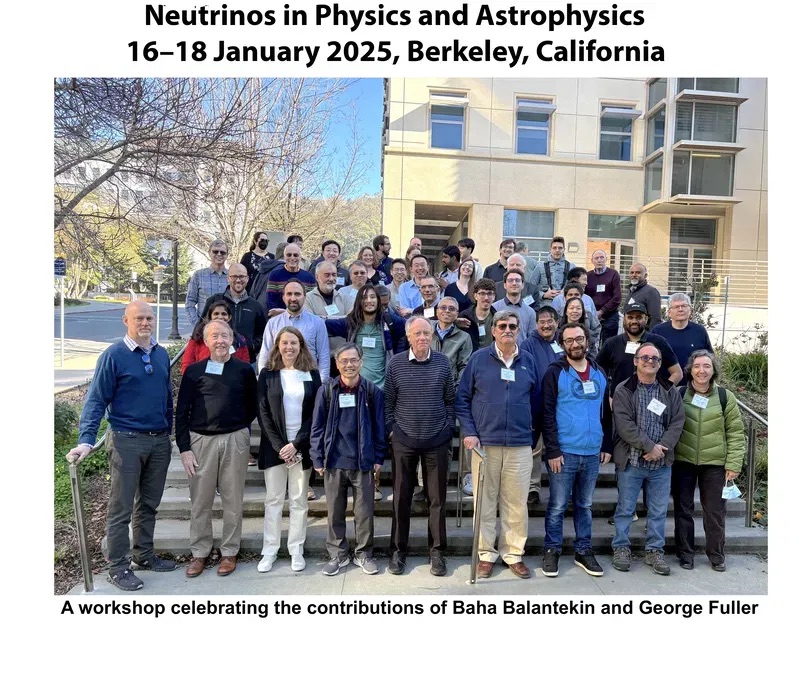
The illustrious career of Baha Balantekin, the Eugene P. Wigner professor of physics at UW–Madison, was celebrated recently at the Neutrinos in Physics and Astrophysics Workshop through the Network for Neutrinos, Nuclear Astrophysics, and Symmetries (N3AS) Physics Frontier Center.
Balantekin works at the intersection of nuclear physics, particle physics, and astrophysics. For much of his career, he has studied theoretical aspects of neutrinos originating in the Sun, supernovae, or neutron star mergers. He has helped pioneer the field known as neutrino astronomy.
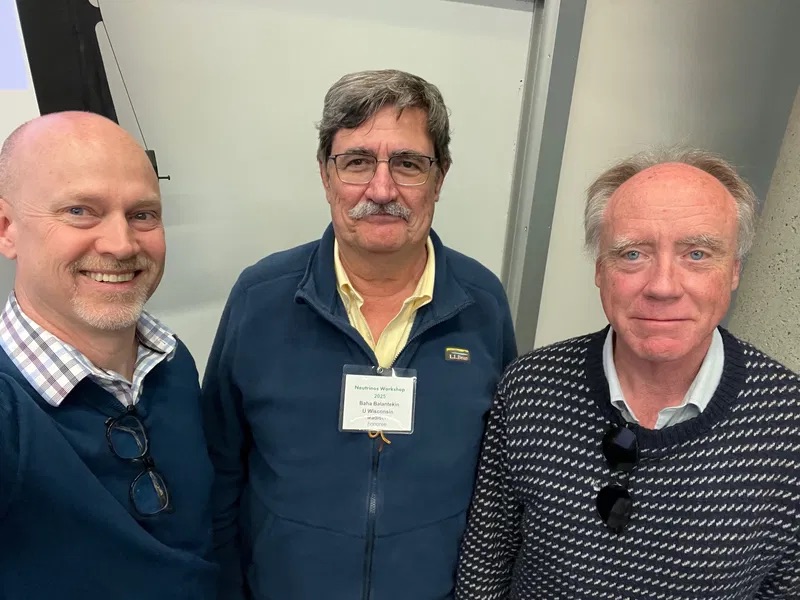
“Even just a few decades ago, if you said ‘neutrino astronomy,’ most physicists would have snickered. That’s because astronomy is about observations and neutrinos are almost impossible to detect,” says John Beacom, PhD ’97, distinguished professor of physics and astronomy at the Ohio State University. “But, over time, physicists have helped to make this seemingly impossible field into something real and vibrant. The observations of astrophysical neutrinos that have been made have been essential to understanding our Sun, supernovae, and distant galaxies.”
Balantekin and George Fuller, a distinguished professor of physics at the University of California, San Diego, have helped lead the field of neutrino astrophysics through both their scientific work and their mentoring of junior scientists. To honor both scientists’ significant and ongoing contributions to the field, three of their former students organized the workshop: Beacom, a former student of Balantekin’s, and Fuller’s former students Gail McLaughlin, distinguished university professor of physics at North Carolina State University and Yong Zhong Qian, professor of physics and astronomy at the University of Minnesota. The event was held Jan 16-18 at the University of California, Berkeley.
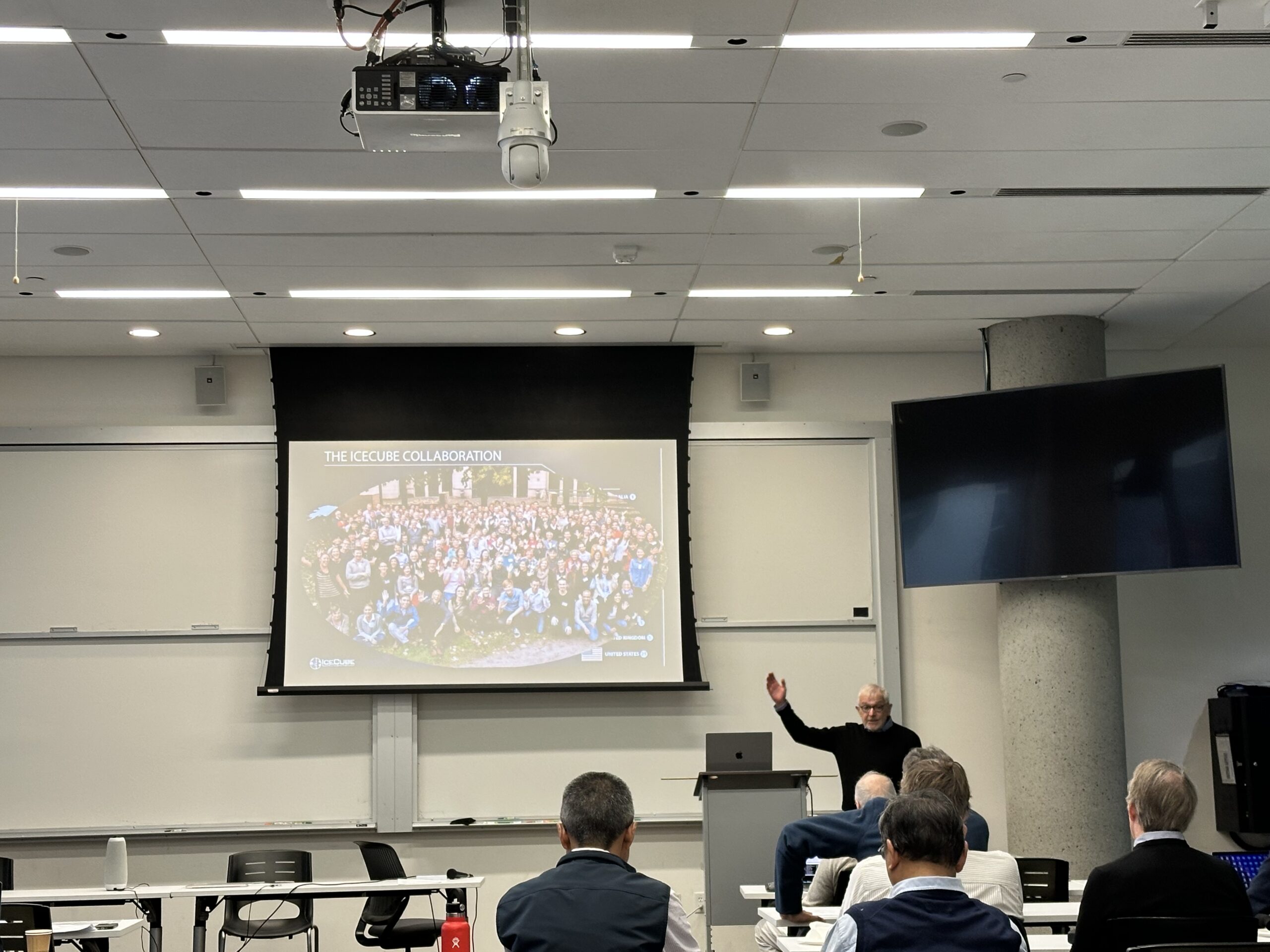
Francis Halzen, a current colleague of Balantekin’s at UW–Madison, was one of the speakers. Other attendees included UW–Madison physics professor Pupa Gilbert and professor emerit Sue Coppersmith.
John Beacom and Pupa Gilbert contributed significantly to this story
Dan McCammon awarded Distinguished Career Prize
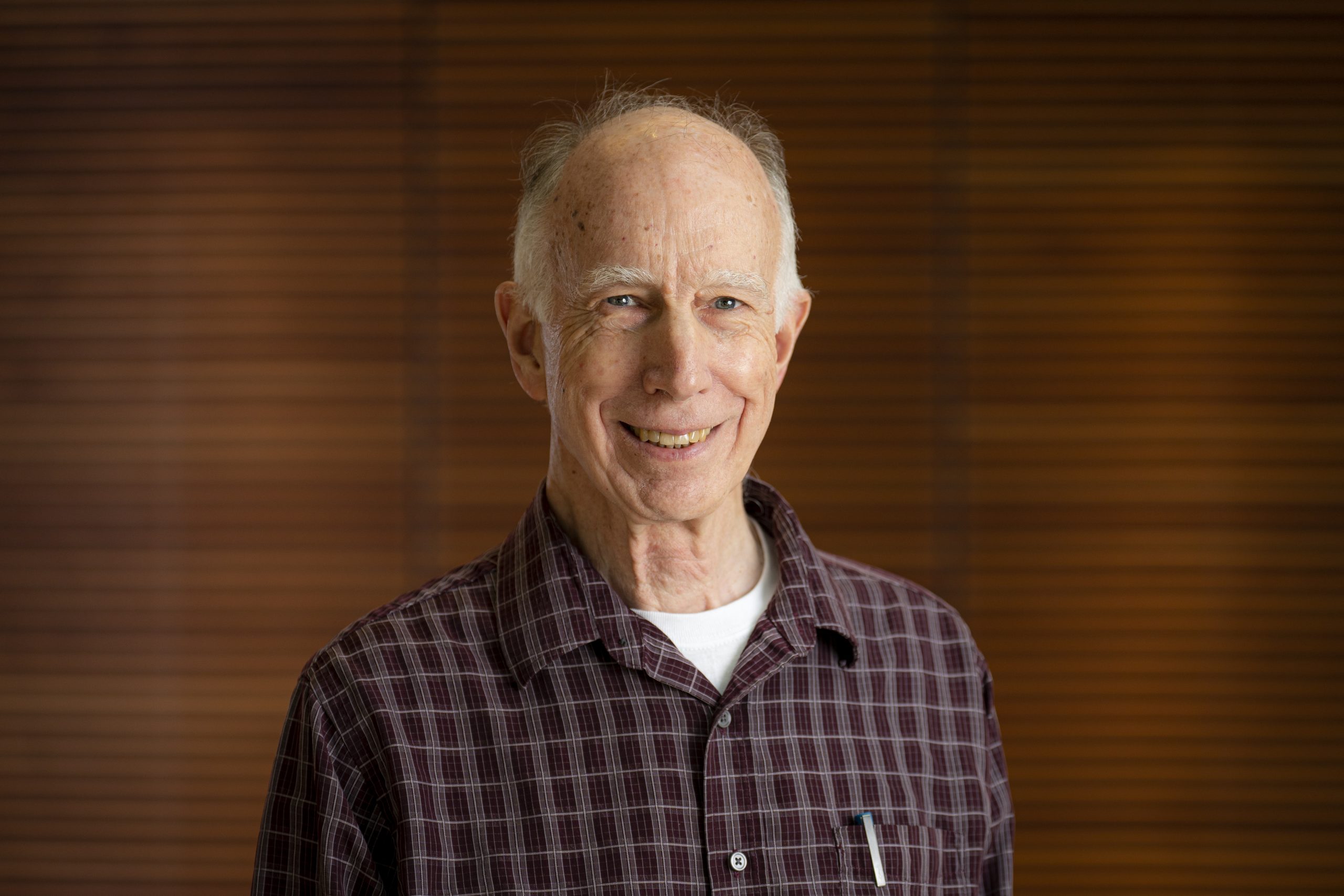
Congrats to Prof. Dan McCammon for earning the Distinguished Career Award from The American Astronomical Society’s (AAS) High Energy Astrophysics Division (HEAD) for his pioneering work on the development of microcalorimeters that has led to breakthroughs in X-ray astronomy and on soft diffuse X-ray background.
The HEAD Distinguished Career Prize is awarded at the time of the Division Meeting to recognize an individual high-energy astrophysicist who has made outstanding contributions to the field of high energy astrophysics throughout their career. Outstanding contributions include a body of important research results (observational, theoretical or experimental) which have led to ground-breaking results in high-energy astrophysics, and/or a career of mentorship to a new generation of high-energy astrophysicists, especially if this mentorship helped to support under-represented or under-resourced scientists and increased the diversity of the HEA community. The winner gives an invited talk at the Divisional Meeting in the award year. The prize carries a cash award of $1500.
AAS announced many 2025 prizes today; the full list can be found at their website.
This post is adapted from the AAS news release and website linked within the text.