Research, teaching and outreach in Physics at UW–Madison
saperdue@wisc.edu
Vandenbroucke group plays instrumental role in proving viability of innovative gamma-ray telescope
Posted on
Scientists in the Cherenkov Telescope Array (CTA) consortium have detected gamma rays from the Crab Nebula using the prototype Schwarzschild-Couder Telescope (pSCT), proving the viability of the novel telescope design for use in gamma-ray astrophysics. The announcement was made today by Justin Vandenbroucke, associate professor at the University of Wisconsin–Madison, on behalf of the CTA Consortium at the virtual 236th meeting of the American Astronomical Society (AAS).
“The Crab Nebula is the brightest steady source of TeV, or very high-energy, gamma rays in the sky, so detecting it is an excellent way of proving the pSCT technology,” says Vandenbroucke, who is also affiliated with the Wisconsin IceCube Particle Astrophysics Center (WIPAC) at UW–Madison. “Very high-energy gamma rays are the highest energy photons in the universe and can unveil the physics of extreme objects, including black holes and possibly dark matter.”
Vandenbroucke is coleader of a team made up of WIPAC scientists and other collaborators that developed and operate a critical part of the telescope: its high-speed camera. Vandenbroucke has worked on the design, construction, and integration of the camera since 2009.
Keith Bechtol, Rob Morgan win UW’s Cool Science Image contest
Posted on
Congrats to Prof. Keith Bechtol and graduate student Rob Morgan for their winning entry in the UW–Madison Cool Science Images contest! Their winning entry — one of 12 selected out of 101 entries — earns them a large-format print which initially will be displayed in a gallery at the McPherson Eye Research Institute’s gallery in the WIMR building.
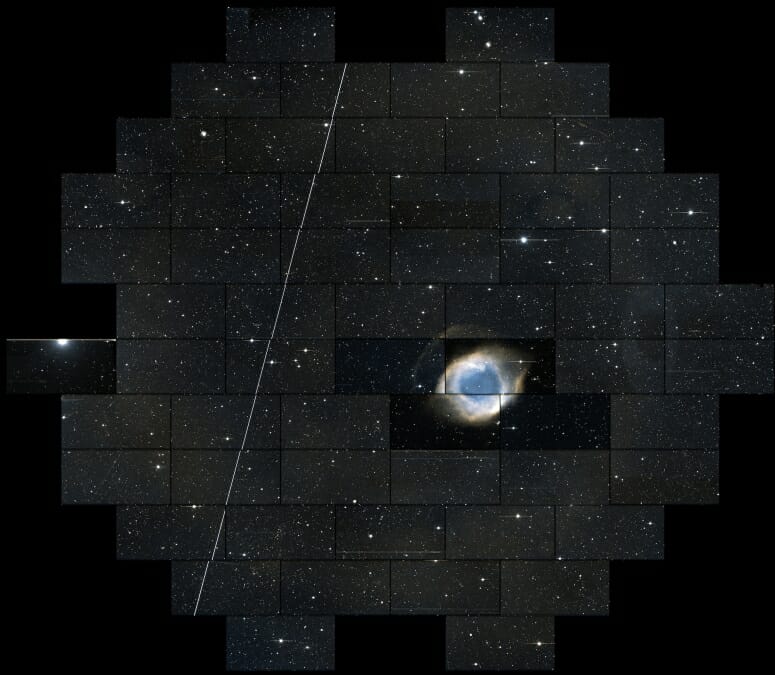
This snapshot of the sky contains thousands of distant galaxies, each containing billions of stars. Bechtol and Morgan were looking for the flash of the explosion of a single star, the potential source of a sub-atomic particle called a neutrino, spotted zipping through the Earth by the IceCube Neutrino Observatory at the South Pole. The distant galaxies, swirling billions of light years away, are all the harder to see because of nearby objects, like the pictured Helix Nebula. The image was captured with a Dark Energy Camera and Victor M. Blanco telescope.
Mark Eriksson has been named the John Bardeen Professor of Physics, through the Wisconsin Alumni Research Foundation (WARF) named professorship program.
The WARF named professorship program provides recognition for distinguished research contributions of the UW–Madison faculty. The awards are intended to honor those faculty who have made major contributions to the advancement of knowledge, primarily through their research endeavors, but also as a result of their teaching and service activities.
Mark Eriksson
Eriksson joined the UW–Madison physics faculty in 1999. His research has focused on quantum computing, semiconductor quantum dots, and nanoscience. He currently leads a multi-university team focused on the development of spin qubits in gate-defined silicon quantum dots. A goal of this work is to enable quantum computers, which manipulate information coherently, to be built using many of the materials and fabrication methods that are the foundation of modern, classical integrated circuits.
“If you look back at my work here over the last, it’ll be 21 years in August, it’s almost all been collaborative, and I’ve really enjoyed the people I’ve worked with,” Eriksson says. “Going into the future, those collaborations are going to continue, of course. We have a real opportunity to see what semiconductor fabrication technology can do for qubits and quantum computing — how can we make really high-quality, silicon qubits in a way that leverages and makes use of the same technology that people use to make classical computer chips?”
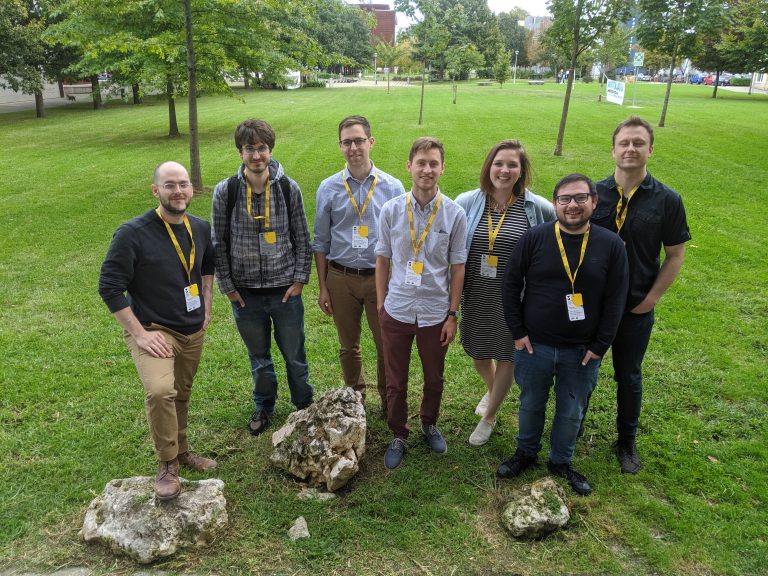
Members of the Eriksson Group at a conference in Spain in Fall 2019.
Eriksson’s past and present UW–Madison collaborators include, in addition to many students and postdocs, physics professors Victor Brar, Sue Coppersmith, Bob Joynt, Shimon Kolkowitz, and Robert McDermott; physics senior scientist Mark Friesen; and materials science and engineering professor Max Lagally and scientist Don Savage.
The WARF program asks recipients to choose the name of their professorship. Eriksson, who graduated with a B.S. in physics and mathematics from UW–Madison in 1992, chose fellow alum John Bardeen — a scientist who has the unique honor of being the only person to receive the Nobel Prize in Physics twice.
“Bardeen was one of the inventors of the transistor, and I work with semiconductor qubits which are very similar to transistors in many ways,” Eriksson explains. “It seemed appropriate to choose him, because he was an alum of the university, he’s a Madison native, and he was co-inventor of the transistor.”
Eriksson was one of 11 UW–Madison faculty awarded WARF named professorships this year. The honor comes with $100,000 in research funding over five years.
“Prof. Mark Eriksson is a world-leading expert in the development of quantum information systems using solid-state quantum dot qubits,” says Sridhara Dasu, physics department chair. “Recognition of his successes in research and his contribution to the training of researchers in this increasingly promising area of quantum information, through the awarding of WARF professorship, is much deserved.”
Twelve projects have been chosen for Round 6 of the UW2020: WARF Discovery Initiative, including three from faculty in the Department of Physics (Mark Eriksson, Robert McDermott, and Justin Vandenbroucke). These projects were among 92 proposals submitted from across campus. The initiative is funded by the Office of the Vice Chancellor for Research and Graduate Education and the Wisconsin Alumni Research Foundation.
The projects were reviewed by faculty across the university. The UW2020 Council, a group of 17 faculty from all divisions of the university, evaluated the merits of each project based on the reviews and their potential for making significant contributions to their field of study.
The goal of UW2020 is to stimulate and support cutting-edge, highly innovative and groundbreaking research at UW–Madison and to support acquisition of shared instruments or equipment that will foster significant advances in research.
Acquisition of a cryogen-free Physical Properties Measurement System (PPMS) for characterization of quantum materials and devices
The project addresses a barrier for UW–Madison researchers in measuring electronic, magnetic, and thermal properties of quantum materials at low temperatures, namely the increasing high costs of cryogens (liquid helium) and lack of a convenient means to perform these measurements in a shared facility. Low-temperature electronic, magnetic, and thermal properties of materials are crucial for fundamental materials discovery and for applications in quantum information, nonvolatile memory, and energy conversion devices.
This project will acquire a cryogen-free Physical Properties Measurement System (PPMS) and house it as a shared-user facility instrument within the Wisconsin Centers for Nanotechnology (CNT). This instrument would be open for all UW–Madison users.
Currently, these measurements depend on external collaborations or low-temperature setups in PI labs which either consume large amounts of cryogens or require time-consuming reconfigurations from experiment to experiment. Having a cryogen-free PPMS would allow researchers to spend less time and money in setting up experiments, potentially freeing up resources for scientific investigations that include new superconducting and topological material discoveries and characterizations of materials for advanced microelectronics and magnetic memory systems.
PRINCIPAL INVESTIGATOR
Jason Kawasaki, assistant professor of materials science and engineering
CO-PRINCIPAL INVESTIGATOR
Jerry Hunter, director of the Wisconsin Centers for Nanotechnology
CO-INVESTIGATOR
Paul Voyles, professor of materials science and engineering and MRSEC Director
Song Jin, professor of chemistry
Mark Eriksson, professor of physics
Thomas Kuech, professor of chemical and biological engineering
Daniel Rhodes, assistant professor of materials science and engineering
Chang-Beom Eom, professor of materials science and engineering
Paul Evans, professor of materials science and engineering
Michael Arnold, professor of materials science and engineering
Dakotah Thompson, assistant professor of mechanical engineering
Cracking the structure of ice: establishing a cryogenic electron backscatter diffraction and Raman capability at UW–Madison
The structure and physical properties of ice determine the behavior of glaciers, ice sheets, and polar ice caps (both terrestrial and extraterrestrial). Moreover, ice is of interest because of its unique light transmission properties, which are currently being harnessed by one of the world’s largest astrophysical experiments through the UW–led IceCube collaboration.
This project will develop the capability to perform scanning electron microscopy (SEM) of water and CO2 ice in the UW–Madison Geoscience Department, focusing on electron backscatter diffraction (EBSD) analysis for ice microstructure and Raman spectroscopy for ice composition. EBSD of ice is an extremely rare analytical capability worldwide.
Having this highly specialized type of analysis capability for ice will enable advances in glaciology, climate science, physics, materials science and planetary science. This technology can accelerate research on glacial sliding and ice deformation, and inform long-standing questions about the transformation of air bubbles to clathrates in glacial ice and their potential as archives of Earth’s past atmosphere. In addition, understanding the structure of ice is critical, for example, to accurate measurement of cosmic ray interactions in the IceCube Neutrino Observatory.
As the only lab in the U.S. offering combined ice EBSD analysis and ice Raman analysis, UW–Madison will establish itself as a nexus for cryosphere research, attracting many collaborations from outside UW–Madison.
PRINCIPAL INVESTIGATOR
Chloe Bonamici, assistant professor of geoscience
CO-PRINCIPAL INVESTIGATORS
Lucas Zoet, assistant professor of geoscience
Shaun Marcott, associate professor of geoscience
Justin Vandenbroucke, associate professor of physics/WIPAC
John Fournelle, senior scientist of geoscience
CO-INVESTIGATORS
Pavana Prabhakar, assistant professor of civil and environmental engineering
Richard Hartel, professor of food engineering
Hiroki Sone, assistant professor of geological engineering
Interdisciplinary engineering of quantum information systems
This project represents a synergistic effort toward engineering practical quantum information systems (QIS). The research unites the experimental superconducting and semiconducting qubit teams on campus with advanced materials characterization and microwave engineering expertise to uncover the underlying sources of decoherence that limit qubit performance and develop next-generation quantum devices for scalable quantum computing and quantum sensing. This effort will build new interdisciplinary connections that nourish the quantum ecosystem at UW–Madison, cutting across departmental and disciplinary lines.
The potential of QIS has been recognized recently by the $1.4 billion federal National Quantum Initiative, and the newly formed Wisconsin Quantum Institute at UW is home to world-leading efforts in the physics of QIS. This project is a next step in expanding these directions to incorporate the engineering effort necessary to develop practical systems capable of solving real-world problems.
PRINCIPAL INVESTIGATOR
Robert McDermott, professor of physics
CO-PRINCIPAL INVESTIGATORS
Mark Eriksson, professor of physics
Susan Hagness, professor of electrical and computer engineering
Paul Voyles, professor of materials science and engineering
Kangwook Lee, professor of electrical and computer engineering
Manipulating the magnetic response to light in natural materials
Posted on
When light moves from one material into another, it bends — like how a partially submerged object appears distorted under water when viewed from above. What if, instead of bending, a material could change the light so much that the material was no longer visible at all?
In a study published in Physical Review A, University of Wisconsin–Madison researchers have shown for the first time that a similar response can be obtained and manipulated in naturally-occurring materials. The findings have implications from the development of “perfect” lenses for improved microscopy to Harry Potter-esque invisibility cloaks.
Visible light is made of both magnetic and electric fields, and the refractive index of a material — how much it bends the light — is determined by how the material interacts with those two fields. Nearly all materials we encounter in everyday life, though, interact entirely with light’s electric field.
Zach Buckholtz
Researchers have spent the past two decades developing artificial materials that more strongly interact with light’s magnetic field by manipulating the refractive index. With a strong enough response, the material could eventually have a negative refractive index, leading to unique optical properties. However, the response in synthetic materials is limited by the size of their repeating units. A naturally-occurring crystal that has much smaller unit cells is likely a better choice.
“Part of producing a negative refractive index is that the material needs to have a strong response to both electric and magnetic fields, so the big challenge is getting that magnetic response in natural materials,” explains Zach Buckholtz, a graduate student in UW–Madison physics professor Deniz Yavuz’s group and lead author of the study. “A few years ago, we published a paper showing that the crystal we’re working with has a magnetic response, and in this study, we were able to manipulate the response.”
The natural material Buckholtz is working with is a silicon-based crystal, which in general is optically ordinary, except that it has been “doped” with the rare earth metal Europium. Rare earth metals are unique in that they contain an abundance of electrons in the atoms’ outer energy shells. Those electrons can then work together to create a bigger magnetic response, but only if they are all in tune with each other.
“If you have some magnetic response and a much larger electric response to light, you can connect those two responses,” Buckholtz says. “To get to a negative refractive index from there, you have to set up coherences between the energy levels, meaning you have to make sure all those energy levels are oscillating together.”
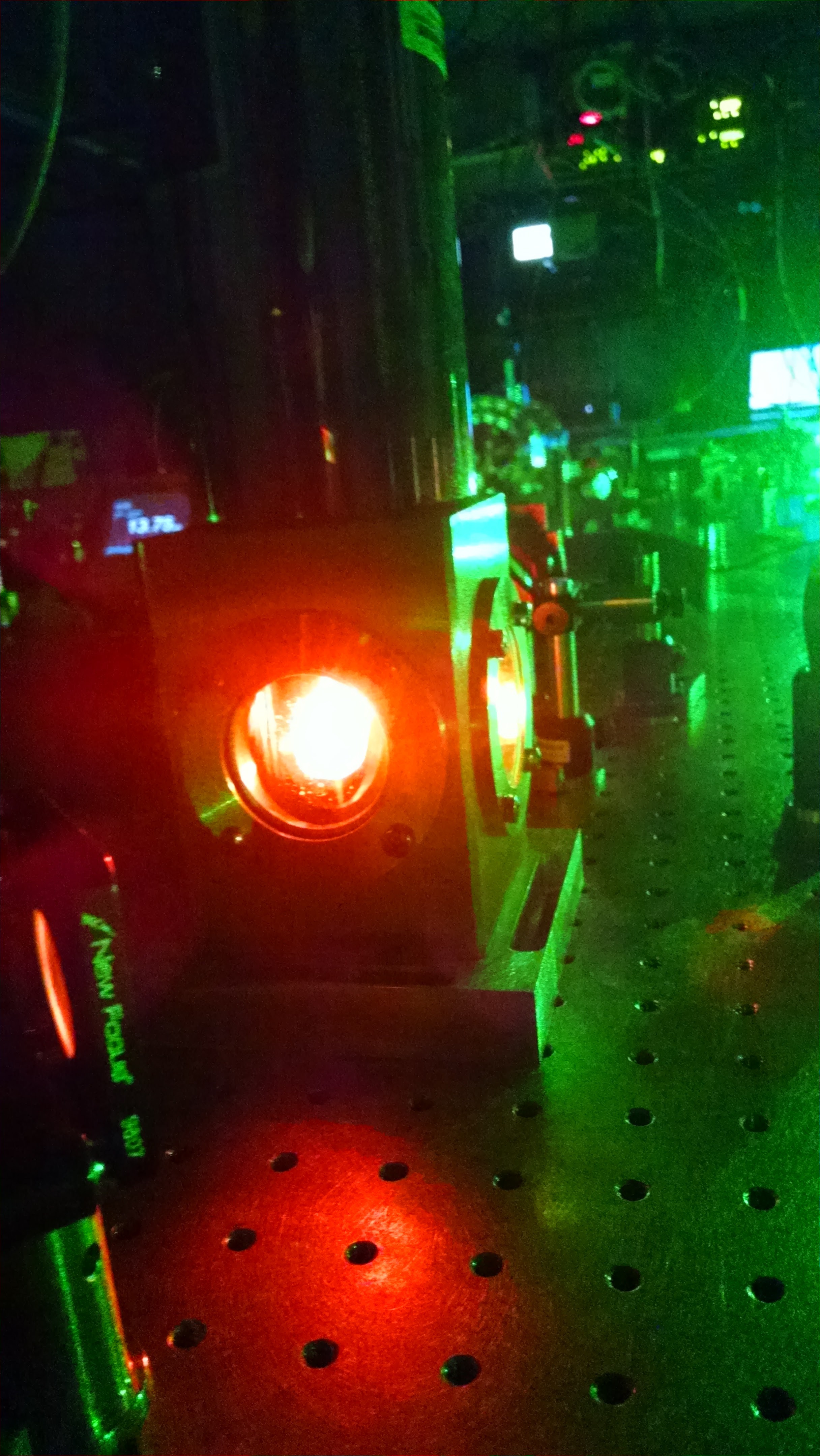
The experimental setup in the Yavuz lab. The orange glow is from the fluorescing crystal, with the green laser providing the green hue outside the chamber.
To show they can manipulate the magnetic response, Buckholtz and Yavuz did two things. First, because the crystal is a mix of ions with slightly different electron responses, they needed to set up their experimental system to select for one class of ion. This uniformity allows for a cleaner interpretation of the results.
“We send a laser into the crystal, and then measure how much of the light is transmitted. But because the crystal isn’t perfect, instead of seeing a narrow peak for the transitions, you’ll see a really broad transition,” Buckholtz explains. “So, we do this procedure known as spectral hole burning to clear out the ions we don’t want and then we’ll be left with just one transition, which is necessary to move on to experiments that involve coherence.”
Next, they wanted to show if they could increase the magnetic response. To do so, they needed to take those selected ions, put them in coherence, and then measure the response compared to ions not in coherence. In these experiments, they shined one (a probe beam) or two (probe and coupling beam) wavelengths of laser at the ions. Both lasers excite electrons in the ions to a higher-energy state, and the scientists can again measure how might light is transmitted through the crystal as a readout of the electron transitions.
“With just the probe beam, we see just the normal transition, and that’s what we did in our previous study. But with the coupling beam added in, it connects and adds another transition state in there,” Buckholtz says. “If those states are in coherence, they cancel each other out, and we see that effect as a peak in transmitted light, which means the index of refraction is going toward zero.”
Buckholtz notes that the magnetic response they see is not yet large enough to produce the materials with interesting new optical properties they are hoping for. Still, he says, this work provides a path forward to continue manipulations to improve the response, such as investigating different rare earth metals.
“We have a magnetic response, we can set up coherence, and we can manipulate the response,” Buckholtz says. “Now, we want to increase the scale of the response to with a goal of eventually making the refractive index below zero.”
The Milky Way’s satellites help reveal link between dark matter halos and galaxy formation
Just as the sun has planets and the planets have moons, our galaxy has satellite galaxies, and some of those might have smaller satellite galaxies of their own. To wit, the Large Magellanic Cloud (LMC), a relatively large satellite galaxy visible from the southern hemisphere, is thought to have brought at least six of its own satellite galaxies with it when it first approached the Milky Way, based on recent measurements from the European Space Agency’s Gaia mission.
Astrophysicists believe that dark matter is responsible for much of that structure, and now researchers with the Dark Energy Survey — including University of Wisconsin–Madison assistant professor of physics Keith Bechtol and his research group — have drawn on observations of faint galaxies around the Milky Way to place tighter constraints on the connection between the size and structure of galaxies and the dark matter halos that surround them. At the same time, they have found more evidence for the existence of LMC satellite galaxies and made a new prediction: If the scientists’ models are correct, the Milky Way should have an additional 150 or more very faint satellite galaxies awaiting discovery by next-generation projects such as the Vera C. Rubin Observatory’s Legacy Survey of Space and Time.
Prof. Keith Bechtol
Two new studies, forthcoming in the Astrophysical Journal and available as preprints (pre-print 1; pre-print 2), are part of a larger effort to understand how dark matter works on scales smaller than our galaxy.
“The ultra-faint galaxies that orbit the Milky Way are small clouds of dark matter with just enough stars to see that they exist. They are nearly invisible, but if spotted, they make excellent natural laboratories to study dark matter,” Bechtol says. “We hope to learn what dark matter is made of, how it was produced in the early Universe, and what relationship it has to the known particle species.”
Shining galaxies’ light on dark matter
Astronomers have long known the Milky Way has satellite galaxies, including the Large Magellanic Cloud, which can be seen by the naked eye from the southern hemisphere, but the number was thought to be around just a dozen or so until around the year 2000. Since then, the number of observed satellite galaxies has risen dramatically. Thanks to the Sloan Digital Sky Survey and more recent discoveries by projects including the Dark Energy Survey (DES), the number of known satellite galaxies has climbed to about 60.
Such discoveries are always exciting, but what’s perhaps most exciting is what the data could tell us about the cosmos. “For the first time, we can look for these satellite galaxies across about three-quarters of the sky, and that’s really important to several different ways of learning about dark matter and galaxy formation,” said Risa Wechsler, director of the Kavli Institute for Particle Astrophysics and Cosmology (KIPAC). Last year, for example, the DES team used data on satellite galaxies in conjunction with computer simulations to place much tighter limits on dark matter’s interactions with ordinary matter.
Now, the team is using data from a comprehensive search over most of the sky to ask different questions, including how much dark matter it takes to form a galaxy, how many satellite galaxies we should expect to find around the Milky Way and whether galaxies can bring their own satellites into orbit around our own – a key prediction of the most popular model of dark matter.
Hints of galactic hierarchy
The answer to that last question appears to be a resounding “yes.”
The possibility of detecting a hierarchy of satellite galaxies first arose some years back when DES detected more satellite galaxies in the vicinity of the Large Magellanic Cloud than they would have expected if those satellites were randomly distributed throughout the sky. More data was needed to conclusively attribute this excess to galaxies that arrived at the Milky Way with the Large Magellanic Cloud.
The two studies probed, analyzed and characterized data from years of observation in two sky surveys.
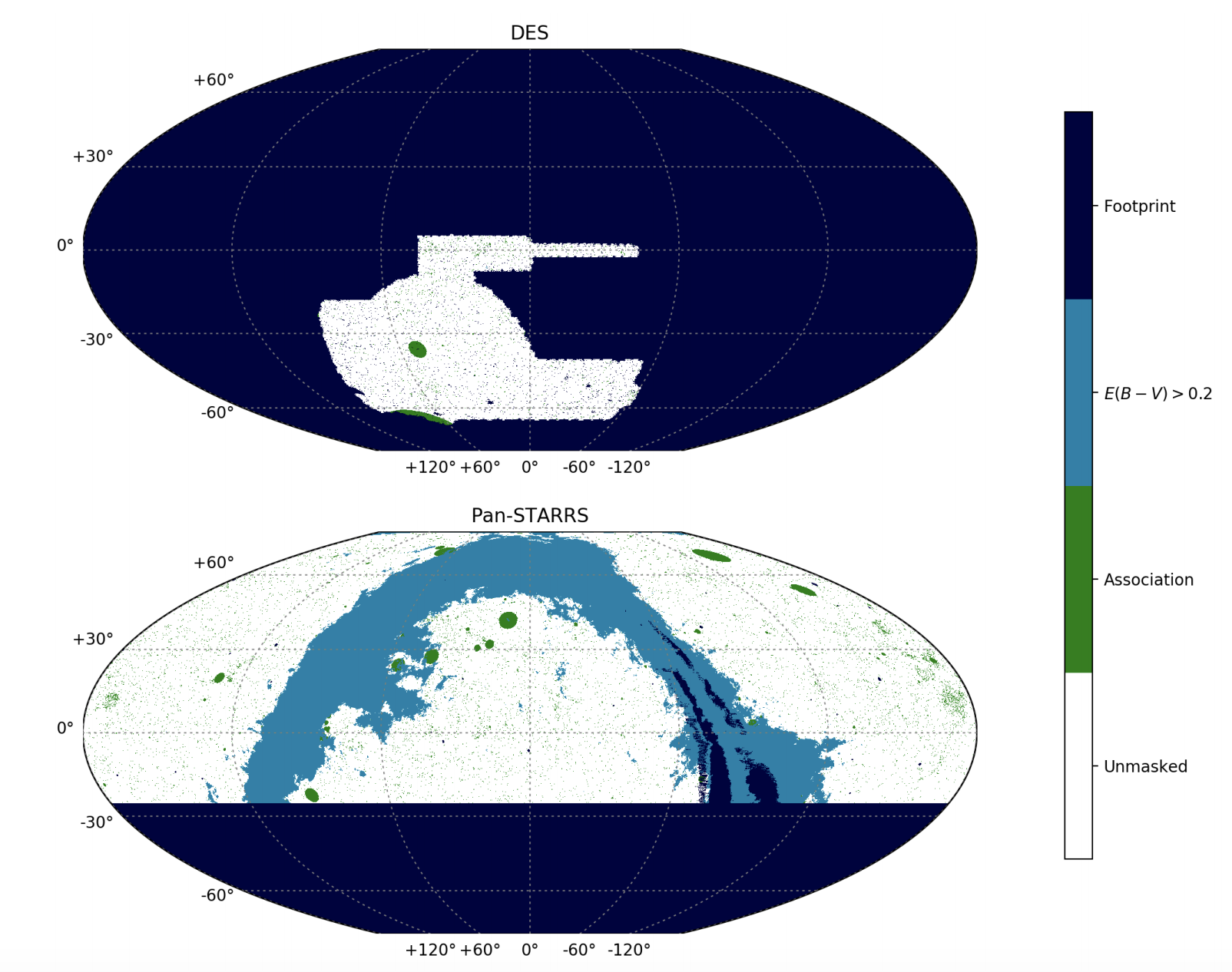
In the first published study, the DES group combined observations from DES with those from the Pan-STARRS survey, together covering 75% of the sky, to test this hypothesis. The DES data represents nearly 40,000 images from a 500-million-pixel camera collected over three years from a telescope in Chile.
The raw DES data was run through a series of data compressions, including a final step led by Bechtol’s group, to identify and catalog individual stars, including their color, which infers temperature, and how far away they are.
“We throw the star catalog into our search algorithms, which are responsible for identifying small groups of stars that are clustered in space and have similar colors and brightness. There’s a particular distribution for what we expect the stars to look like in ultrafaint galaxies,” says UW-Madison physics graduate student Mitch McNanna. “Even then we’re not 100 percent sure that we’ve found a real galaxy, so we also collect spectroscopic observations to measure the doppler motion of the stars. Hopefully we see the group of stars is moving in a way that’s different from the rest of the stars in the Milky Way halo.”
The team, including Alex Drlica-Wagner at Fermilab, produced a model of which satellite galaxies are most likely to be seen by current surveys, given where they are in the sky as well as their brightness, size and distance.
In the second study, led by others in the DES team including Ethan Nadler at Stanford University and collaborators, the team took the findings of the latest satellite census and analyzed computer simulations of millions of possible universes. Those simulations model the formation of dark matter structure that permeates the Milky Way, including details such as smaller dark matter clumps within the Milky Way that are expected to host satellite galaxies. To connect dark matter to galaxy formation, the researchers used a flexible model that allows them to account for uncertainties in the current understanding of galaxy formation, including the relationship between galaxies’ brightness and the mass of dark matter clumps within which they form.
Those components in hand, the team ran their model with a wide range of parameters and searched for simulations in which LMC-like objects fell into the gravitational pull of a Milky Way-like galaxy. By comparing those cases with galactic observations, they could infer a range of astrophysical parameters, including how many satellite galaxies should have tagged along with the LMC. The results were consistent with Gaia observations: Six satellite galaxies should currently be detected in the vicinity of the LMC, moving with roughly the right velocities and in roughly the same places as astronomers had previously observed. The simulations also suggested that the LMC first approached the Milky Way about 2.2 billion years ago, consistent with high-precision measurements of the motion of the LMC from the Hubble Space Telescope.
Galaxies yet unseen
In addition to the LMC findings, the team also put limits on the connection between dark matter halos and galaxy structure. For example, in simulations that most closely matched the history of the Milky Way and the LMC, the smallest galaxies astronomers could currently observe should have stars with a combined mass of around a hundred suns, and about a million times as much dark matter. According to an extrapolation of the model, the faintest galaxies that could ever be observed could form in halos up to a hundred times less massive than that.
And there could be more discoveries to come: If the simulations are correct, there are around 150 more satellite galaxies – more than double the number already discovered – hovering around the Milky Way. The discovery of those galaxies would help confirm the researchers’ model of the links between dark matter and galaxy formation, and likely place tighter constraints on the nature of dark matter itself.
Shared experiences: Conference for women in physics brings UW undergrads together
Posted on
UW–Madison sophomore Haley Stueber did not always know she wanted to study physics, but she had an inkling.
“I started taking astronomy and physics classes in high school, and what really got me into physics was the astronomy aspect,” Stueber says. “I was always of the mindset that I wanted to keep learning, and I felt like the realm where I could do that was space, because the universe is so big.”
Like most women interested in pursuing a physics major, Stueber noticed something when she started college.
Unlike most of their physics lectures, the undergrads who attend CUWiP sessions are surrounded by only women and gender minorities.
“All of my physics courses are predominantly male,” she says. “It was intimidating at first. I’ve definitely gotten more used to it, but it still just kinda sucks looking around the room and being like, ‘Alright, there’s one woman over there, one in that corner, and me.’” She notes that the male majority in her classes has not been largely problematic, but it would be nice to have more of a female presence.
Stueber’s experiences are similar to those of many women physics and physical science majors. According to Joelle Corrigan, a physics graduate student and president of GMaWiP, a UW–Madison organization for Gender Minorities and Women in Physics, only around 20 percent of undergraduate physics majors are women.
In an effort to support and retain women in physics, the American Physical Society hosts the Conference for Undergraduate Women in Physics (CUWiP). This year, 10 UW–Madison undergraduates, along with Corrigan and physics grad student Abigail Shearrow, attended the Midwest regional CUWiP, held January 17-19 and hosted by the University of Minnesota–Twin Cities.
“It is a very rare, empowering experience to be in a packed auditorium filled with women and gender minorities all excited about physics,” Corrigan says of the annual conference, which she first attended as an undergraduate. “They have many talks from amazing female scientists, sharing their work and providing role models to many students who may not have seen successful females in that role previously.”
Stueber concurs with Corrigan that it was helpful to see and meet women in the research labs they toured or heard speak during the conference — every presenter was a women scientist. Katy Jurgella, a junior astrophysics and geology major who is only now taking her first physical science course with a female professor this spring, agrees.
“Every presenter who talked about their research also gave an overview of their life story. If you see just their research, you’re like, ‘Oh, wow, this woman has a PhD in astrophysics, I’ll never get there,’” Jurgella says. “But then they mention they were born on a farm and I was like, ‘I was born on a farm, too!’ It was inspiring to me.”
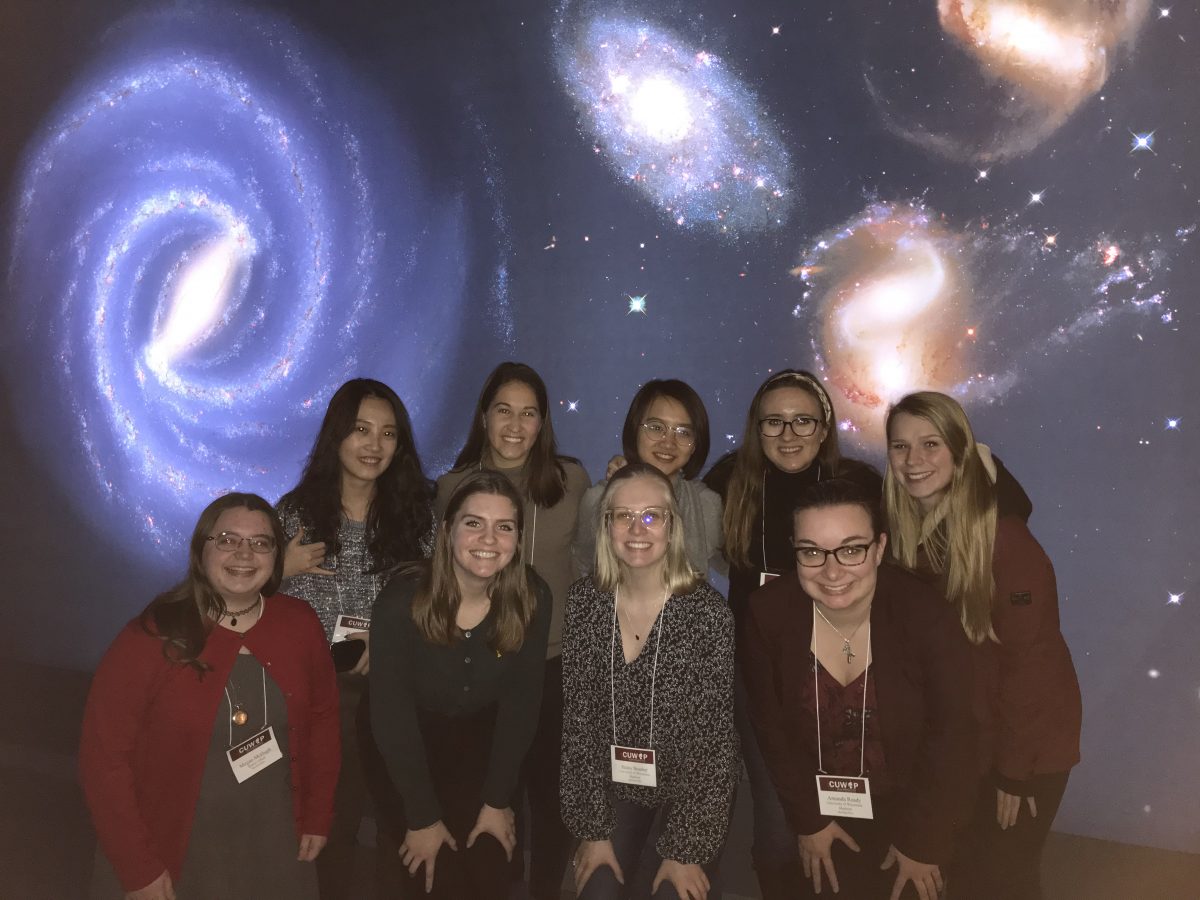
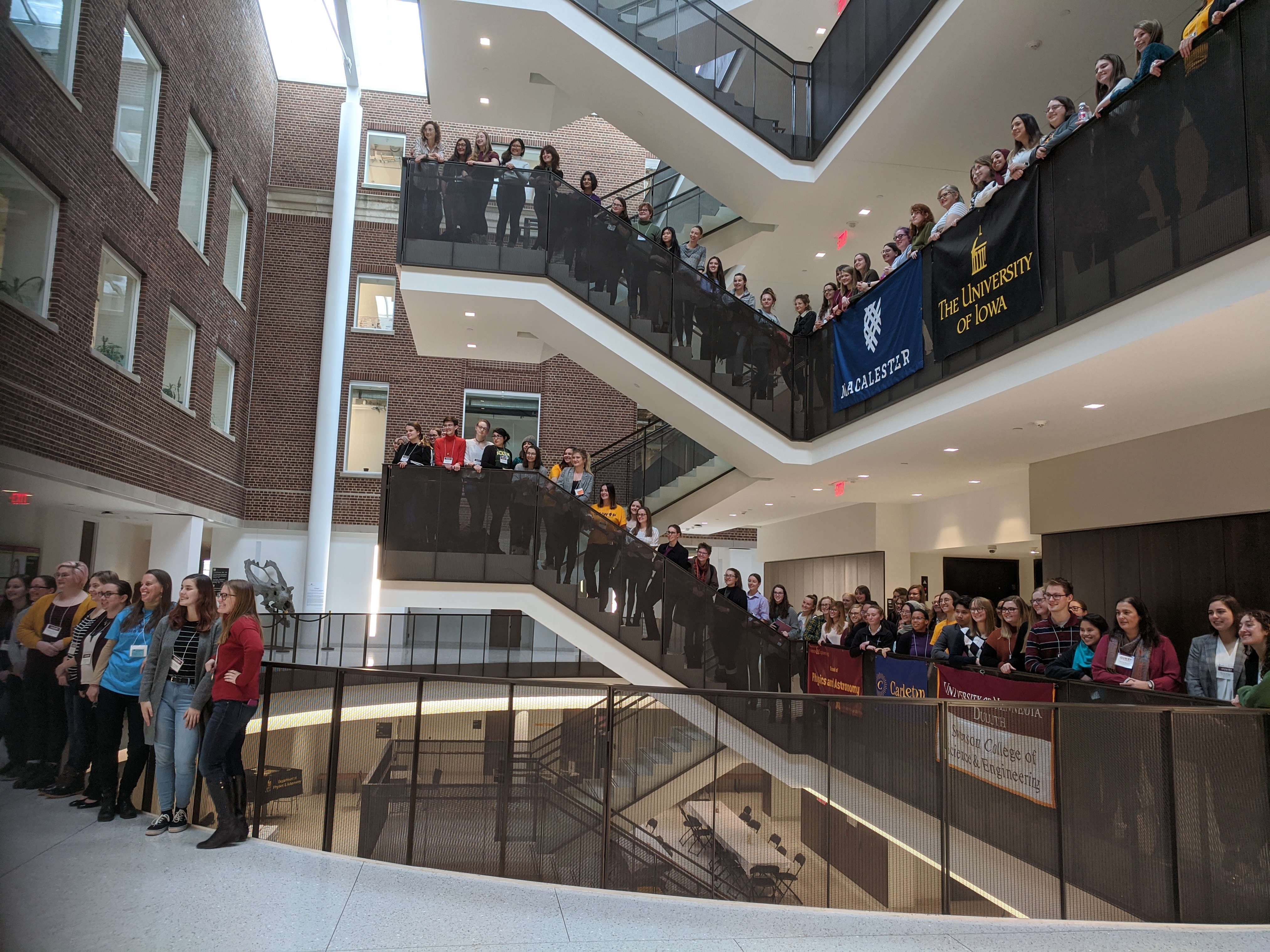
Students from all over the Midwest attended the regional CUWiP, hosted by the University of Minnesota–Twin Cities.
While one focus of the conference was on research, an equal emphasis was given to professional development, including topics that often strongly apply to women.
Junior AMEP major Gabby Every says, “I went to breakout sessions this year on imposter syndrome, negotiation techniques for women specifically, well-being, work-life balance, and one on grad school. It was a catch-all of issues faced by women specifically.”
Anna Gerosolina, a junior astrophysics and chemistry major who currently has no plans to attend graduate school, says the professional development sessions were very helpful because they did not solely focus on women in academia issues.
“There was one talk about being a woman in the workforce in general, and how you need to be a little more aggressive. But it’s a hard balance because a lot of times we come across as bossy even though it comes across as great when guys are aggressive,” Gerosolina says. “That really stuck with me. It was basically, just stop apologizing for existing. And I didn’t even realize how much I did that.”
UW women physical sciences undergraduates enjoy a conference meal together.
The Midwest regional CUWiP was held January 17-19, just before the spring semester began. The students who attended have already noticed a difference in how they approach their courses, professors, and classmates.
“Even two weeks into the semester, I’ve noticed I’m better at asking questions in class because I’m less afraid,” says Jurgella. “At the conference, they stressed, ‘Don’t be embarrassed if you don’t know something, because no one knows anything!’ It’s helped me remain humble, but I’m also less embarrassed now to ask about something I don’t know.”
All the women spoke of the support they now have from their fellow attendees, such as studying together, working together on projects, and just sharing experiences as women in the physical sciences.
“The conference is a great environment because sometimes I forget how reserved I can be in a room full of dominant male voices,” says Every. “Once you’re surrounded by all these women who feel the same way and have gone through similar things, you come out of your shell and talk about things that really matter to you.”
Adds Gerosolina, “These are women I can study with and not be mansplained about how to do basic physics. We even have a Snapchat group chat now!”
Baha Balantekin elected APS Speaker of the Council
Posted on
Baha Balantekin, the Eugene P. Wigner Professor of Physics at the University of Wisconsin–Madison, has been elected Speaker of the Council for the American Physics Society (APS). He will serve as Speaker-elect in 2020, Speaker in 2021, and Speaker Emeritus in 2022.
The APS Speaker of the Council presides over the Council, a body of elected leadership within the professional society. The Speaker also serves on the APS Board of Directors as well as presiding over the Council’s Steering Committee.
“It is an honor to be elected, for me and for the UW,” Balantekin says. “Speaker of the Council is another public face of APS besides the Presidential line.”
APS is the professional society of not only physicists in the United States, but also has a worldwide membership. According to the mission statement, APS exists to advance and diffuse the knowledge of physics for the benefit of humanity, to promote physics, and to serve the broader physics community. APS relies on volunteers to serve in leadership positions, such as Speaker of the Council, to advance its mission.
“Having Prof. Balantekin in the leadership role in the American Physics Society is a matter of pride for our department, and we are happy to share his leadership skills with the wider physics community,” says Sridhara Dasu, chair of the UW–Madison department of physics.
Balantekin was elected to the role at the annual election meeting of the APS Board and Council, held in early November 2019. He has been a Fellow of APS since 1994. He is currently completing his second year on the Council of Representatives and his first year on the Board of Directors, to which he was elected last year.
Wesley Smith honored for achievements in particle physics
Posted on
The American Physical Society (APS) announced today, Oct 22, that Wesley Smith, a University of Wisconsin–Madison Professor Emeritus of Physics and former Bjorn Wiik Professor of Physics, has earned the 2020 W.K.H. Panofsky Prize in Experimental Particle Physics.
The Panofsky Prize recognizes “outstanding achievements in experimental particle physics,” and is the top APS award in that field.
Smith developed systems that enabled the discovery of the Higgs boson, a previously elusive particle believed to give mass to all matter. Smith led a team of over 100 scientists on the CMS experiment trigger system that captured the data for the Higgs’ discovery at the Large Hadron Collider (LHC) in Geneva.
“In the experiment at the LHC, proton beams collide 40 million times per second, and each time the beams cross, detectors record a snapshot. That’s over a megabyte of data, 40 million times per second. You can’t store it all,” Smith explains. “The problem is, one in 10 trillion of those collisions actually has a Higgs in it, and you don’t want to lose any of them. So how do you do this?”
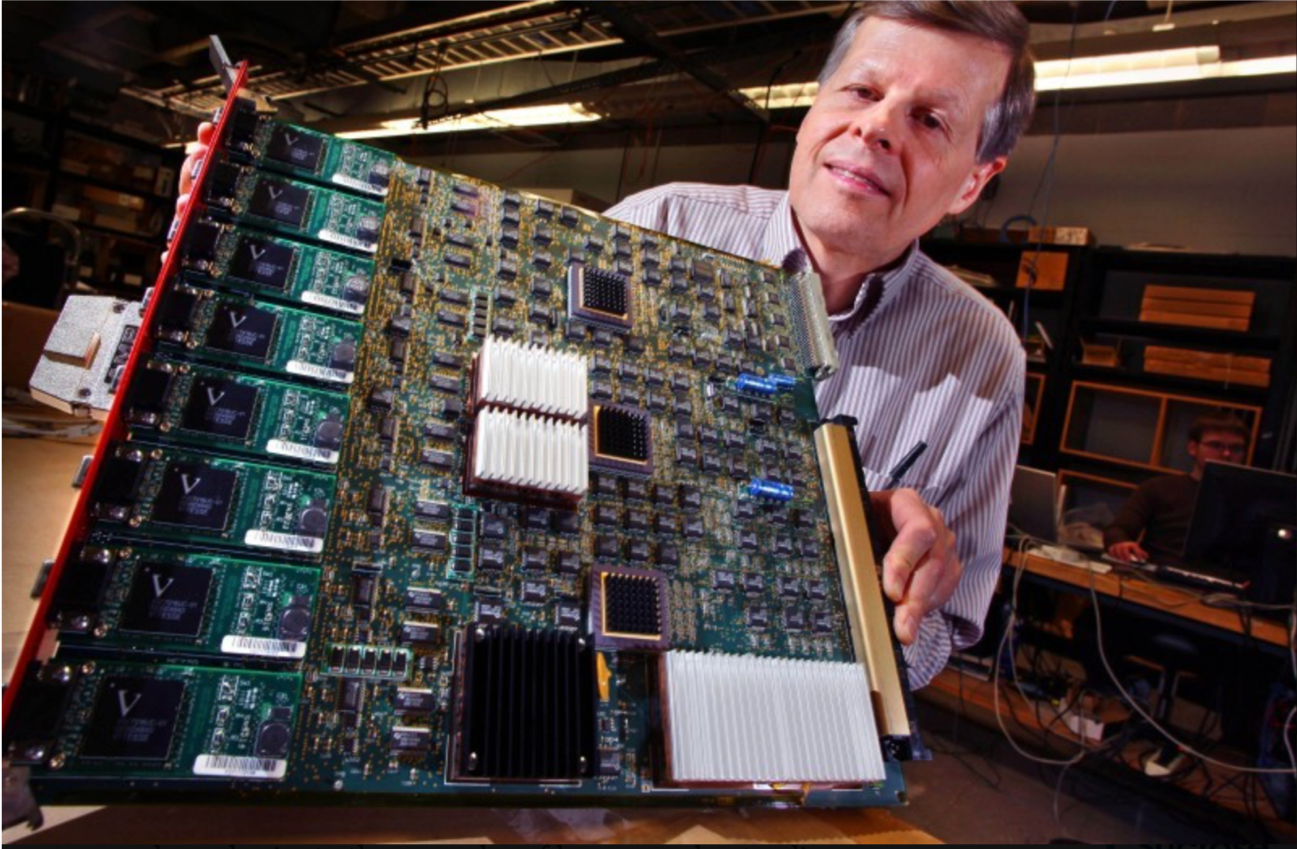
To sift through the enormous amount of data, Smith and his team developed a triggering system. The two-step mechanism quickly filters through the first set of data, using high speed electronics to take one billion collisions per second and identify interesting patterns in up to 100,000 of them. Then, the second step uses thousands of computing nodes to filter the data down to 1,000 collisions per second — a reasonable amount of data that can be stored.
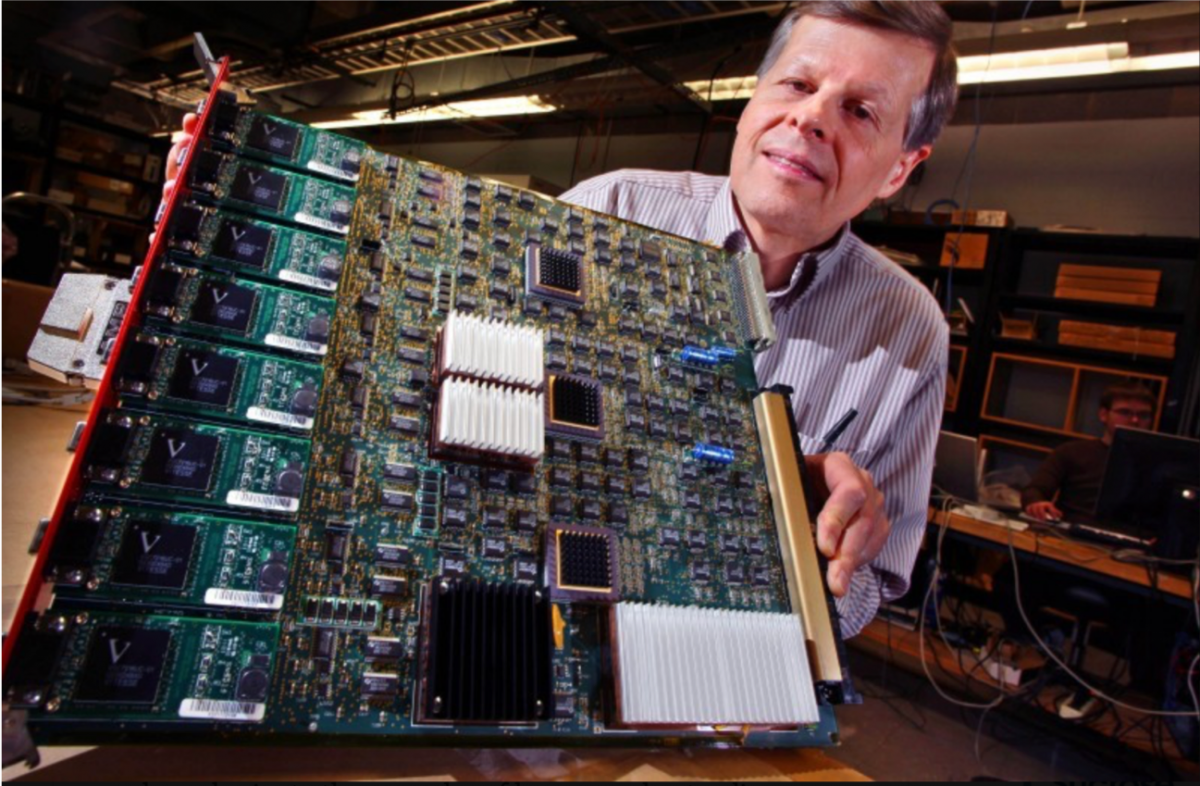
Professor Wesley Smith shows the electronics of the trigger system which led to the discovery of the Higgs Boson. Smith led the team that designed and developed the trigger system.
“We designed a large amount of electronics that runs incredibly fast, and it had to be programmable and flexible because we didn’t know what we were going to find,” Smith says. “We’re basically throwing out 99.9999% of the data, and keeping a tiny fraction where all the physics has to come out.”
Smith, who had previously led a team charged with a similar task for the Zeus experiment in Hamburg, Germany, was asked to lead the CMS triggering team in 1993. The Higgs was discovered in June 2012.
Even though a major goal of the CMS experiment was realized, physicists have much left to learn about the Higgs, which means studying more Higgs events. Continuing plans for the experiment, set to go online in the mid-2020s, involve increasing the amount of proton collisions by a factor of 10, resulting in 10 times more data per second. As Smith was finishing his career, he worked on the initial prototyping for an even more advanced triggering system to filter through larger data sets.
“This award means a great deal to me because it’s the recognition of my colleagues, of the team of people who contributed, and because it recognizes this particularly challenging area of detector development and particle physics experimentation which had to be solved in order to do physics at the LHC,” Smith says.
UW–Madison physics department chairperson Sridhara Dasu, who trained with Smith before beginning his faculty position, nominated Smith for the award.
“Professor Smith is recognized as the world-leading expert in the design, construction and operations of the trigger electronics system for hadron colliders,” Dasu says. “The trigger system is at the very heart of particle physics experiments, requiring the very best talent. Professor Smith is the leader in training those best experimenters.”